Overview
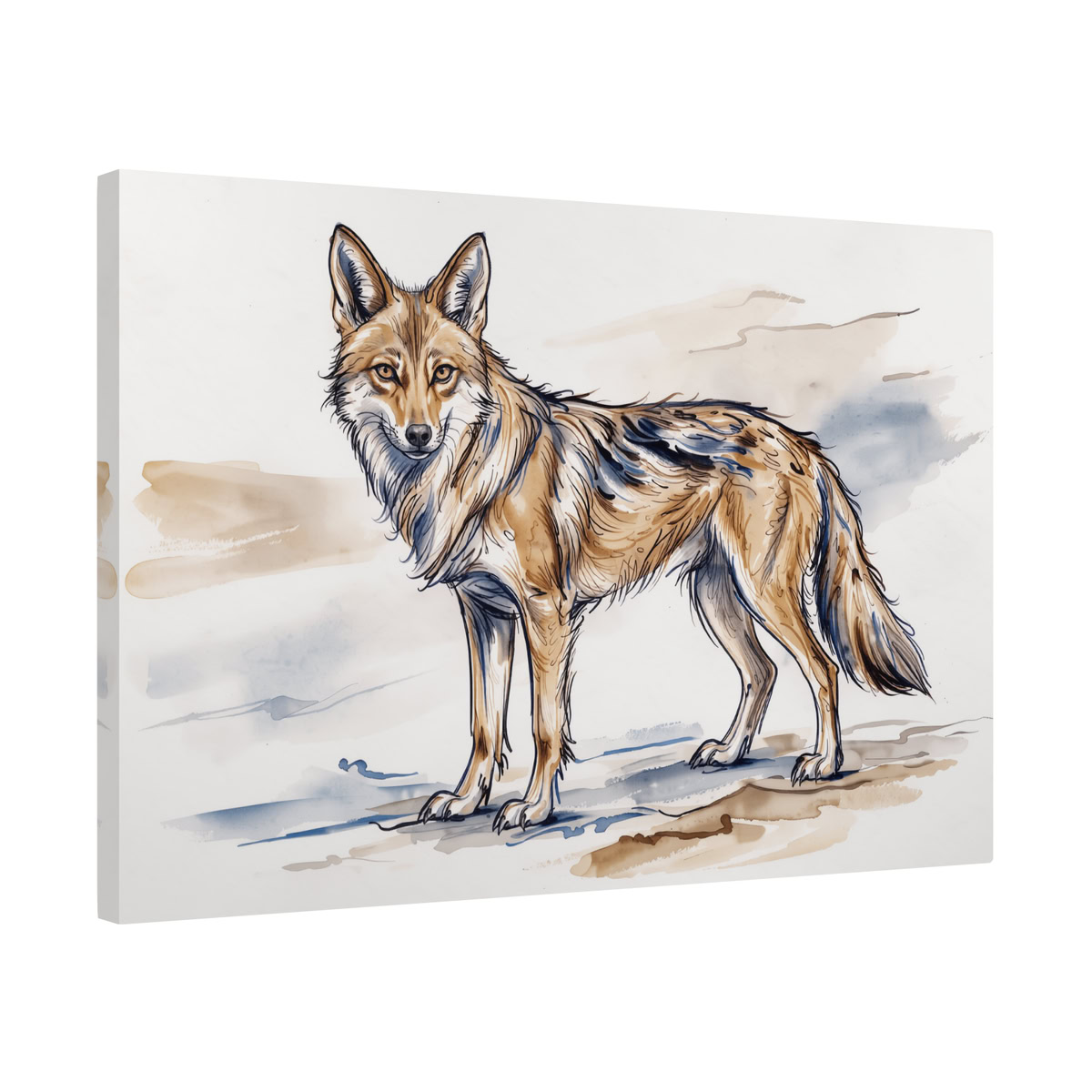
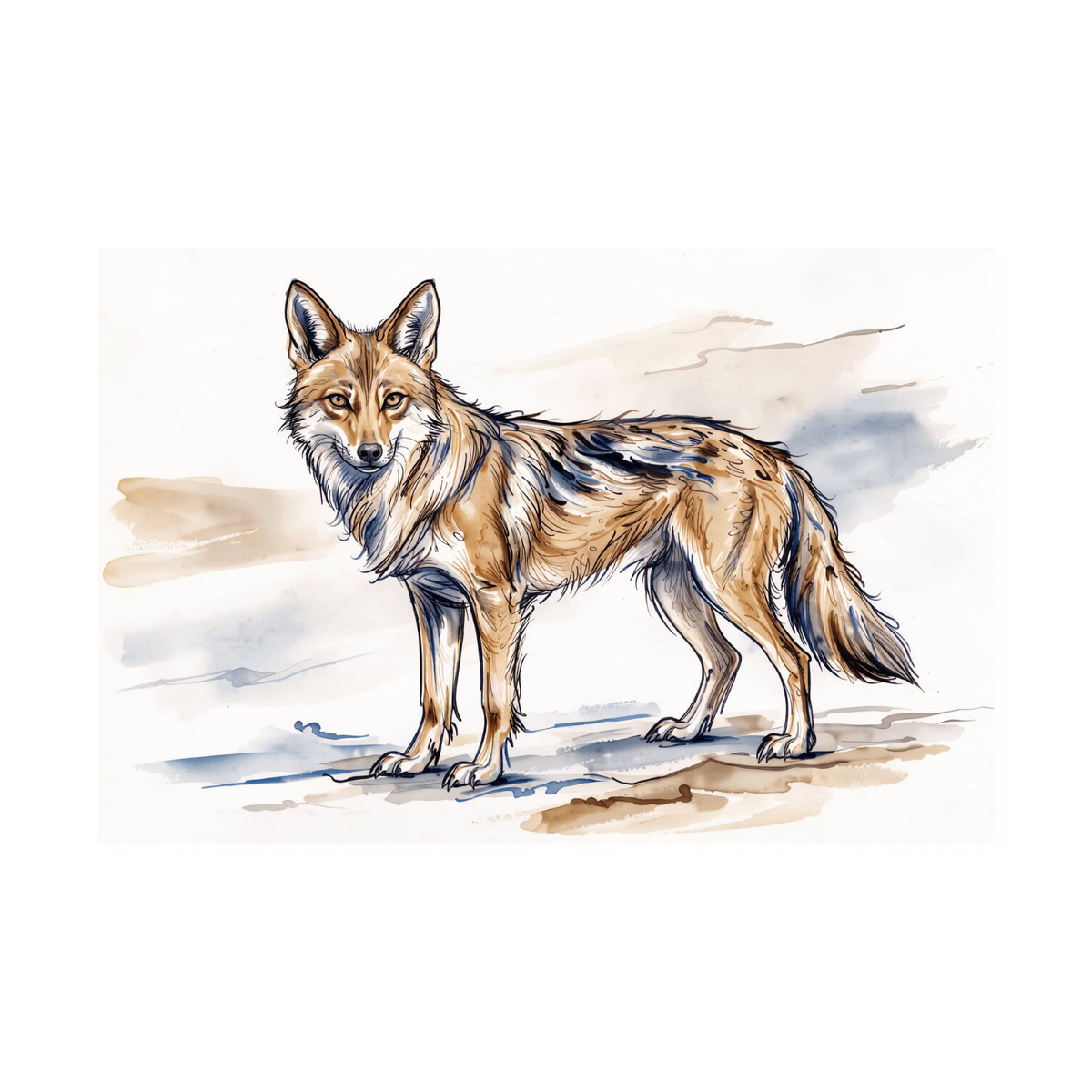
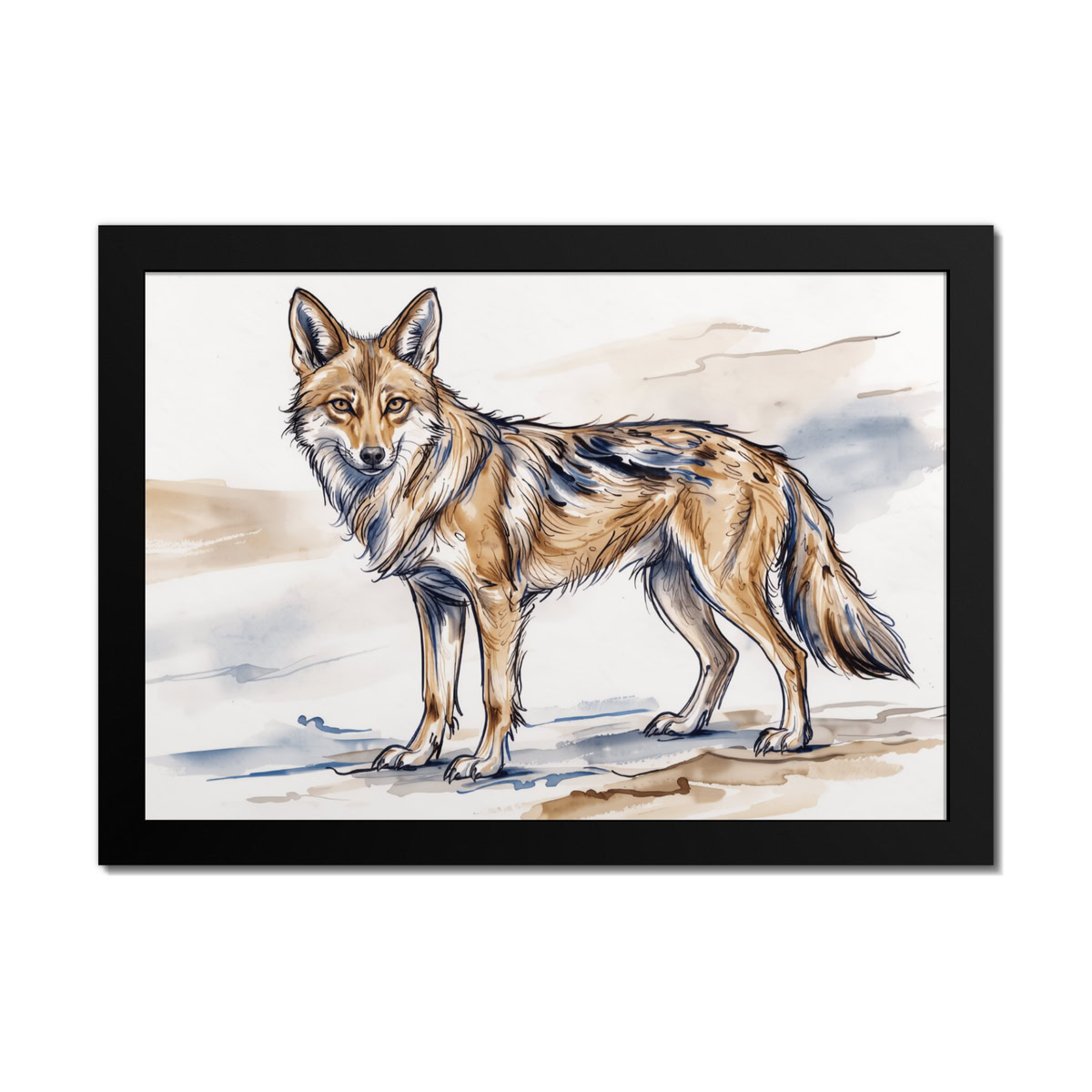
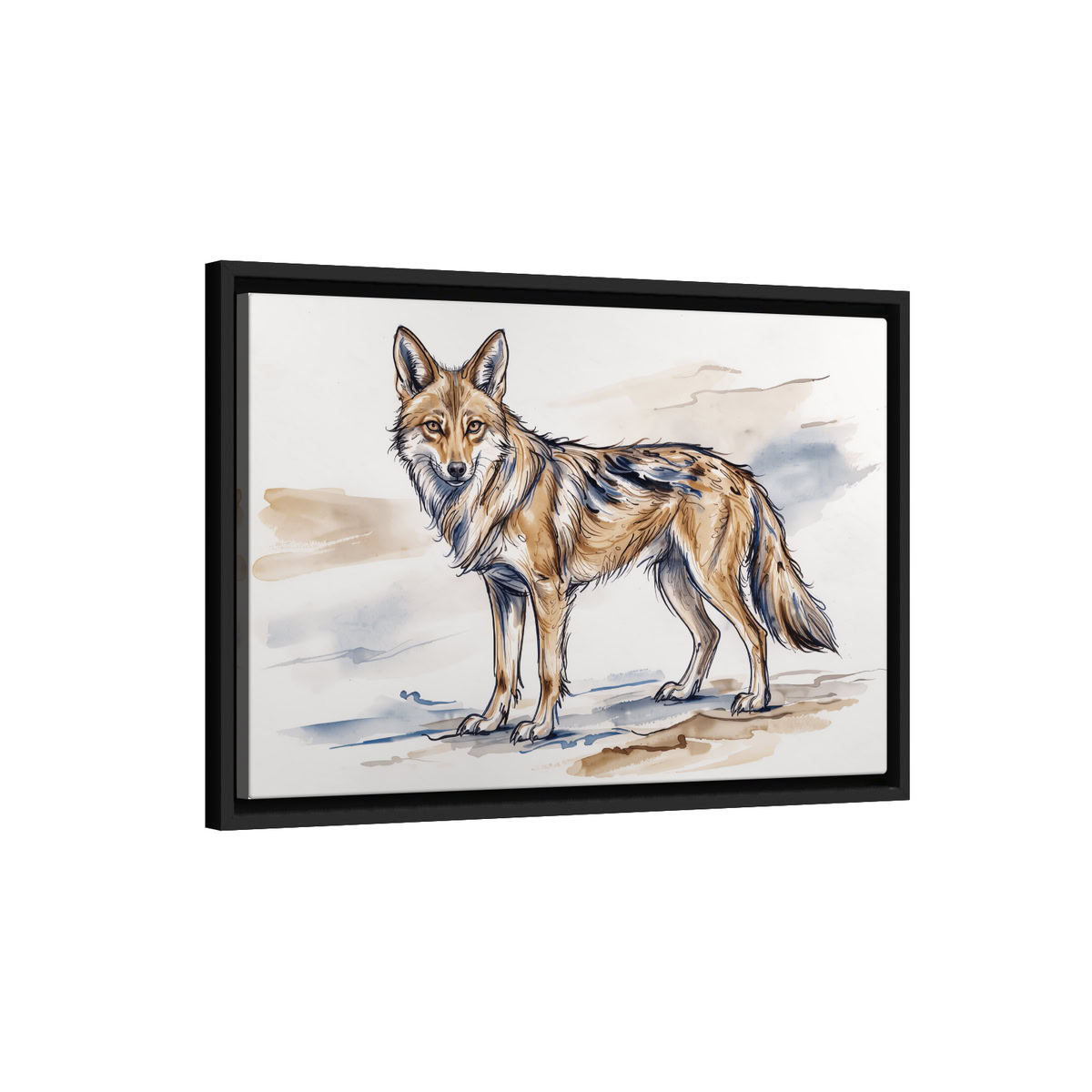
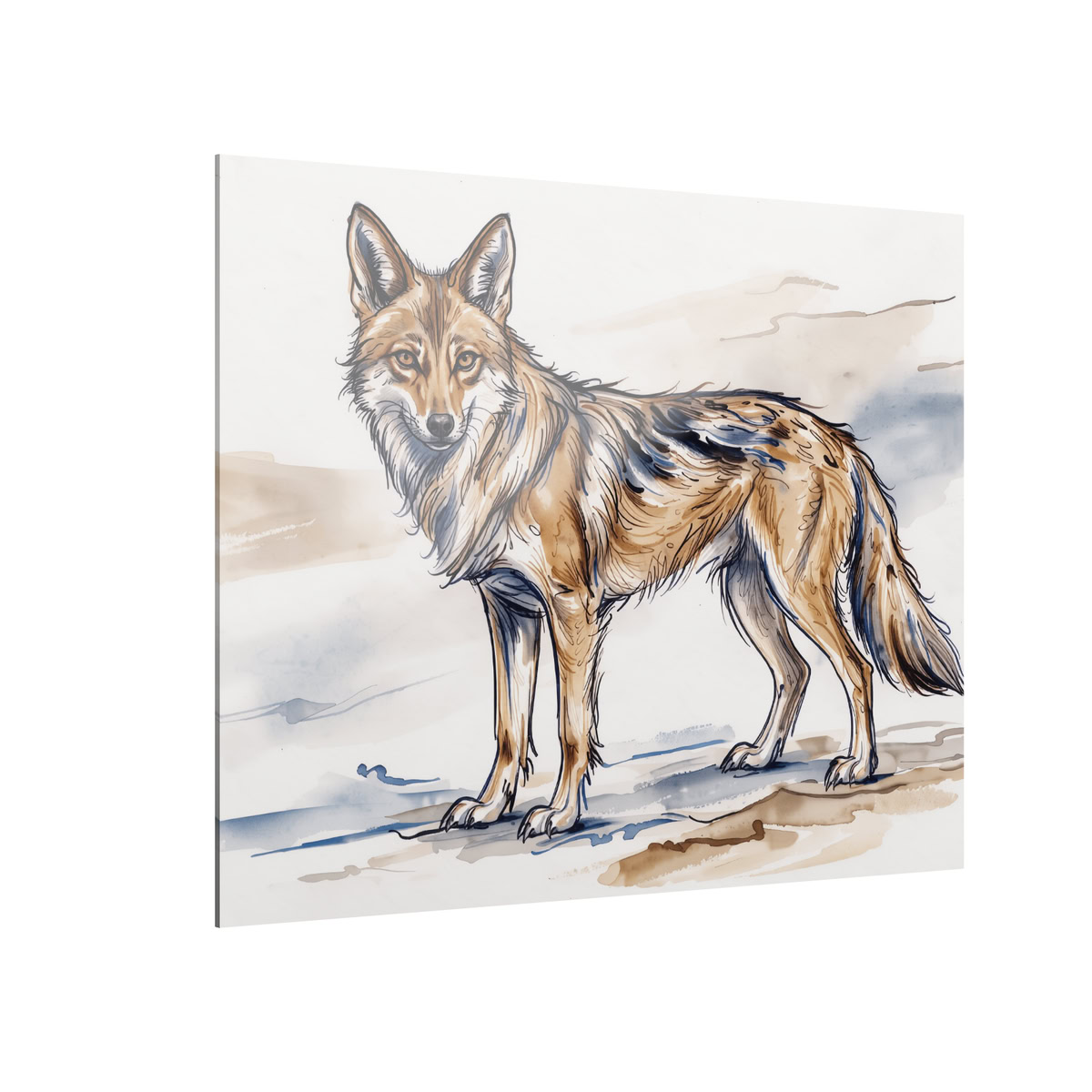
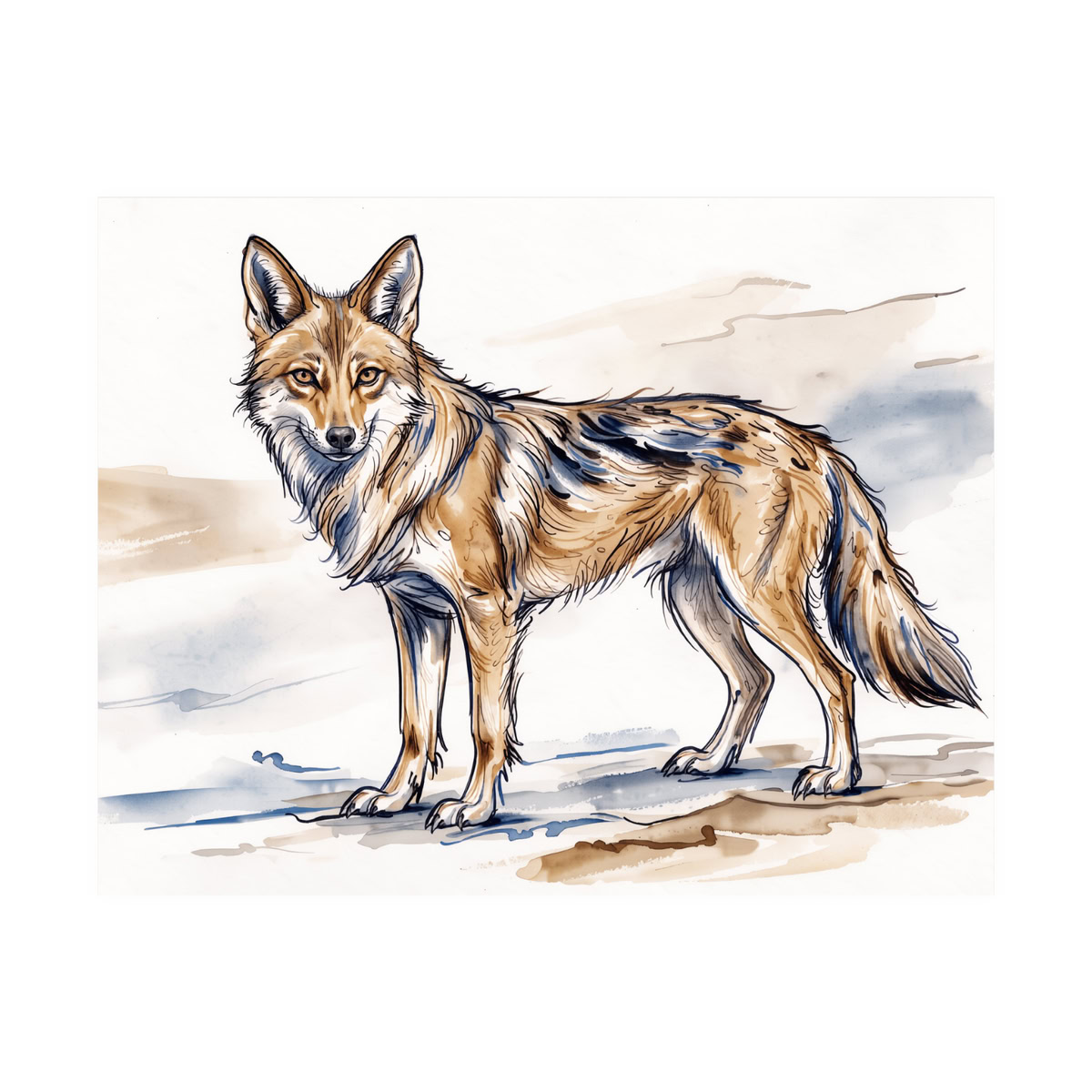
A fine art print measuring 54 × 36 inches on 175 g/m² archival paper with a matte, one-sided print. The artwork has a landscape orientation. The visible palette consists of earthy and muted tones. Available in 6 sizes (10 × 8, 18 × 14, 20 × 10, 30 × 22, 40 × 27, or 54 × 36 inches). This digital composition presents a complete golden jackal, Canis aureus, rendered entirely through flowing blue, beige, and brown ink-like strokes. The full-body animal stands in profile at the center, facing left with its head turned toward the viewer, all four paws, long legs, pointed ears, narrow muzzle, arched back, bushy tail, and sweeping tail fully contained within generous open space from every image edge. Its alert face and coat are defined by layered dark linear marks: deep brown-black contours around the eyes, nose, ears, spine, and tail base; warm beige washes across the chest, belly, and inner legs; muted gold-beige suggested through translucent ochre-brown tonal transitions; and restrained blue accents tracing selected strands along the neck, shoulders, and tail. Flowing calligraphic strokes form the golden coat, with tapered lines curling into the fur and small pooled areas gathering beneath the cheek, shoulder, haunch, and tail tuft. The animal’s name is conveyed only through its recognizable anatomy and markings, with no written identification. Beneath it, sparse blue-grey ground strokes and two low pools of diluted brown ink suggest an unoccupied rocky plain without adding scenery that competes with the subject. In the background, broad quiet fields of pale beige and smoky blue fade into open negative space, crossed by a few thin, irregular ink currents and scattered dry-brush streaks. The composition fills the canvas edge to edge as an uninterrupted artwork, with no border, frame, mat, visible paper edges, surrounding surface, people, text, signatures, watermarks, or logos.
Subjects and details
The main subject is a golden jackal, Canis aureus, depicted in a full-body profile stance. The composition centers the animal, which faces left but turns its head to engage the viewer directly. Key anatomical features include its pointed ears, narrow muzzle, arched back, and bushy tail. The piece is a study in form and texture, using ink strokes to define the creature's alert posture and detailed coat.