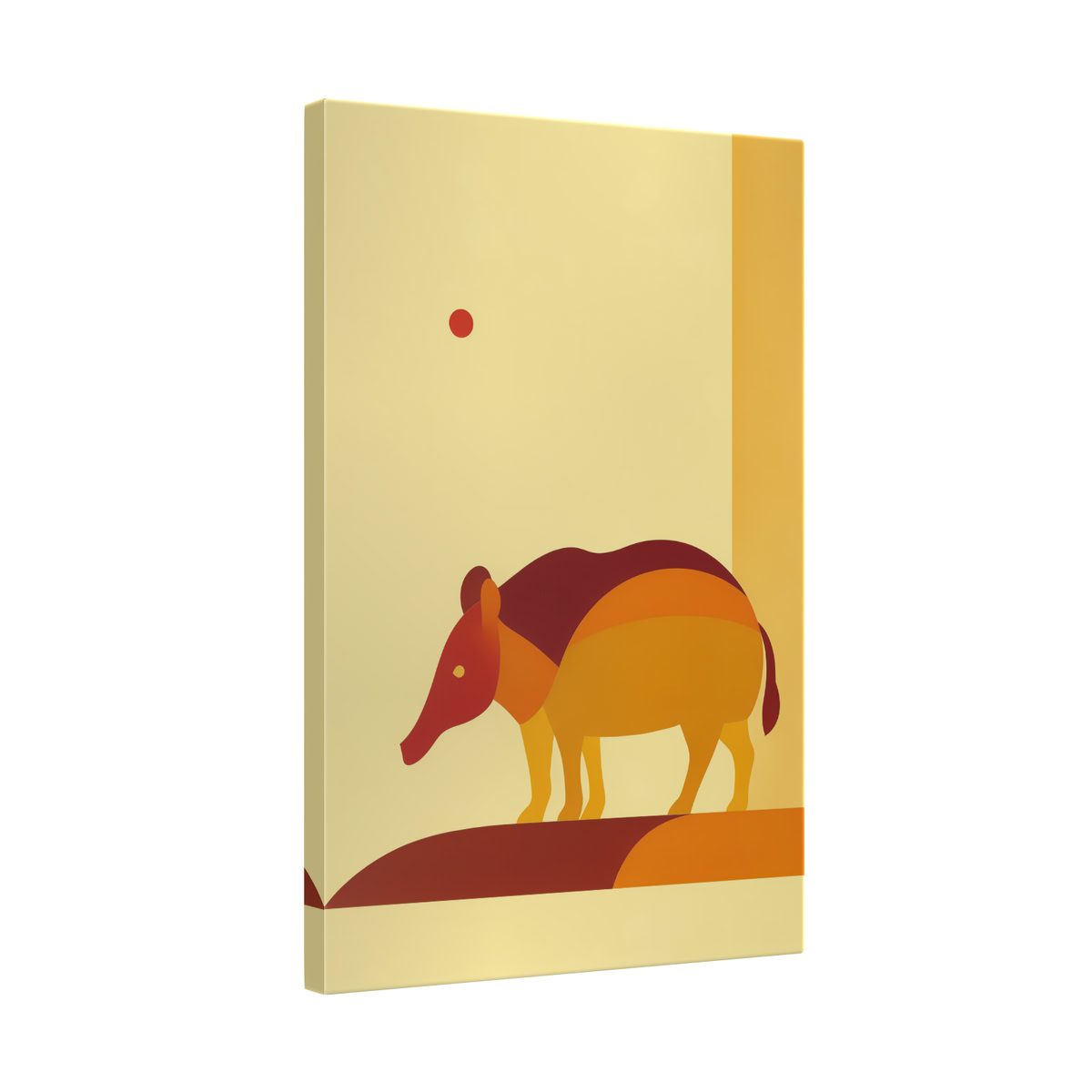
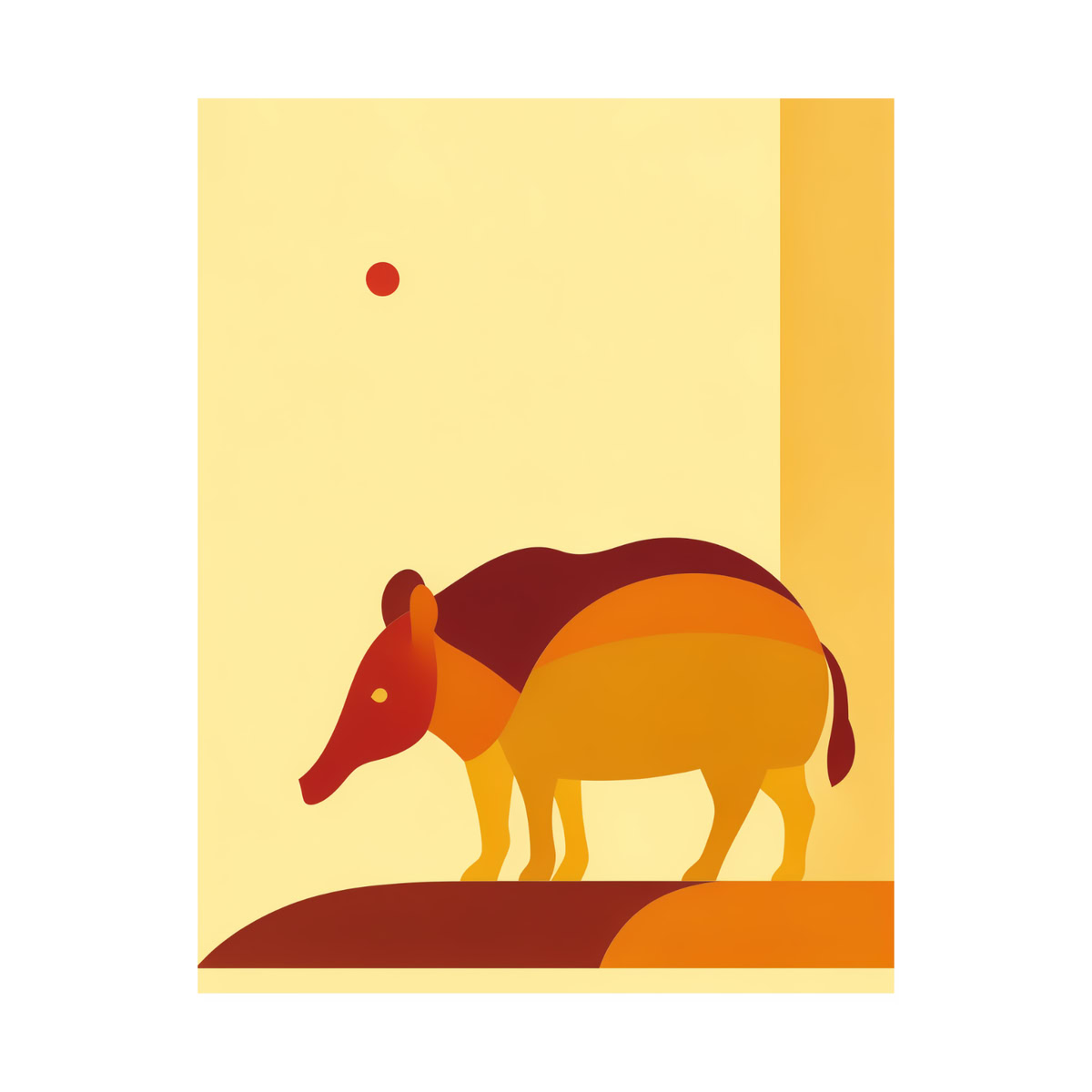
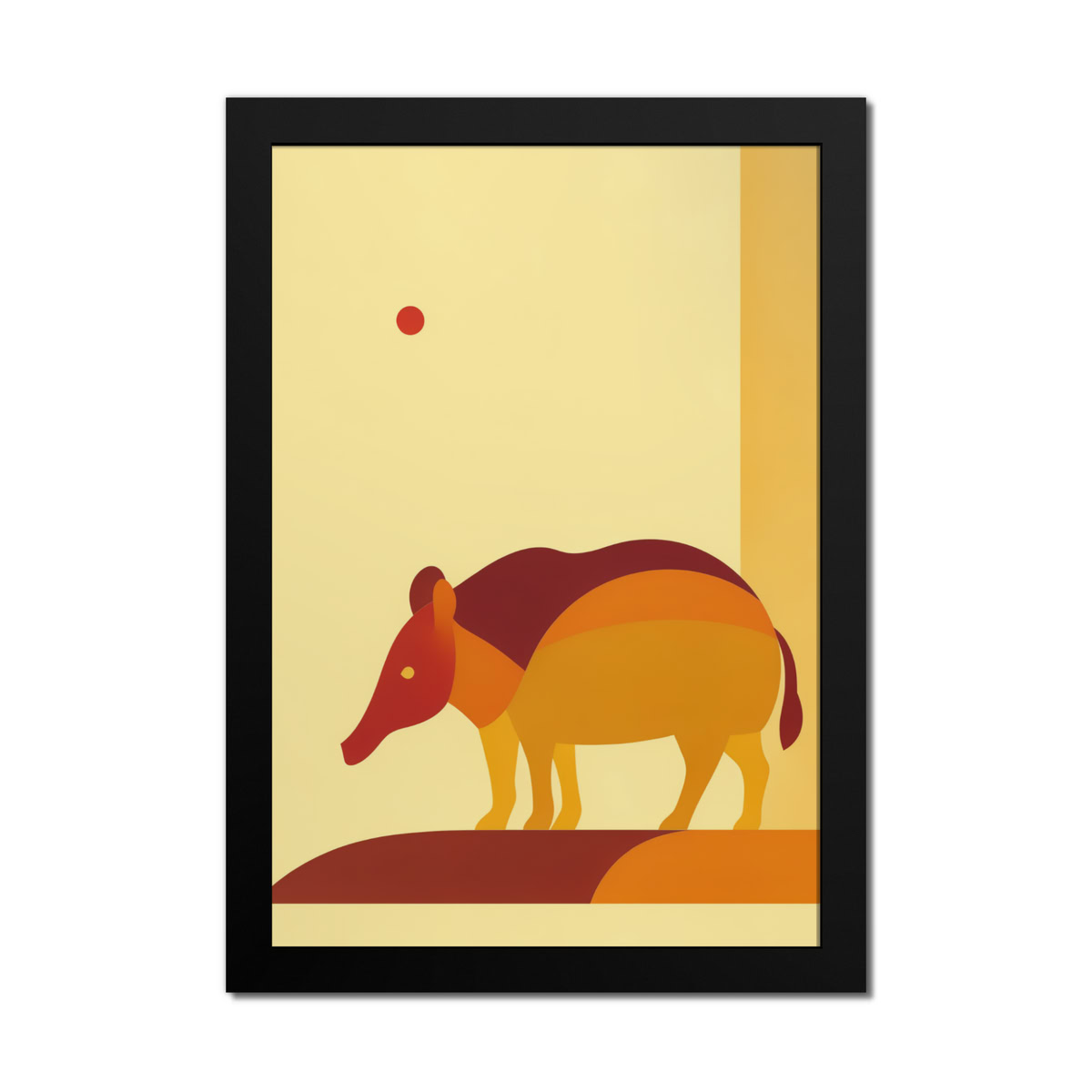
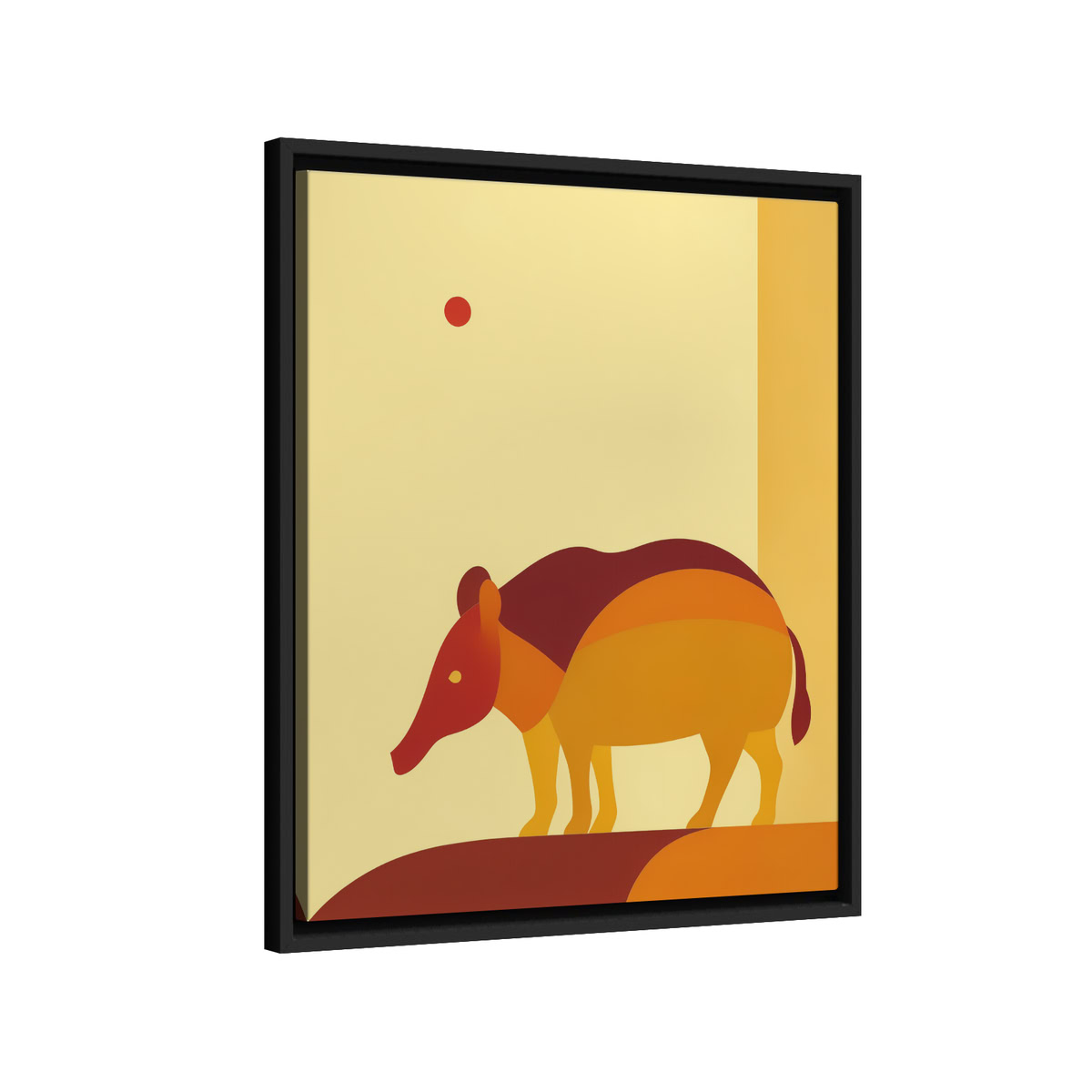
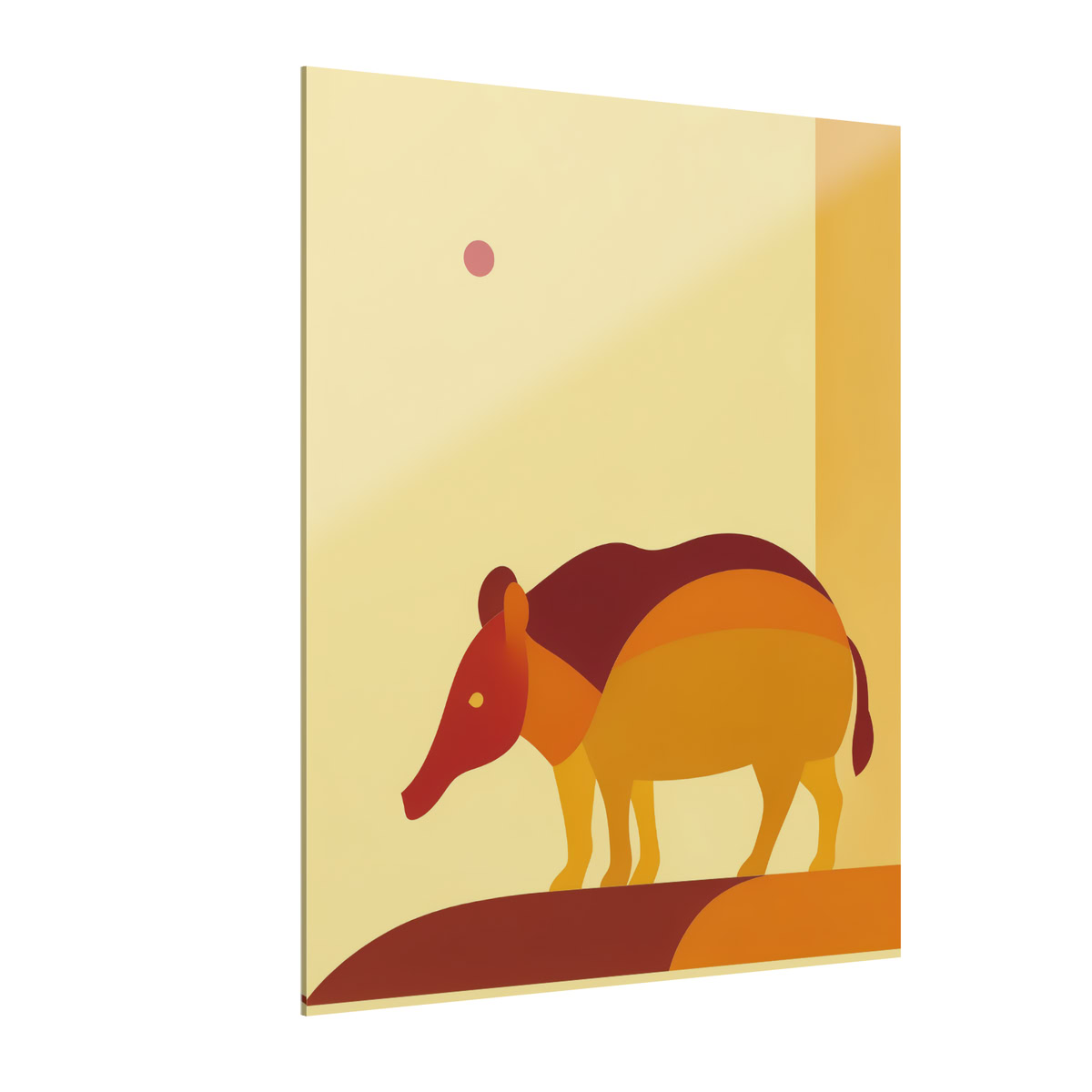
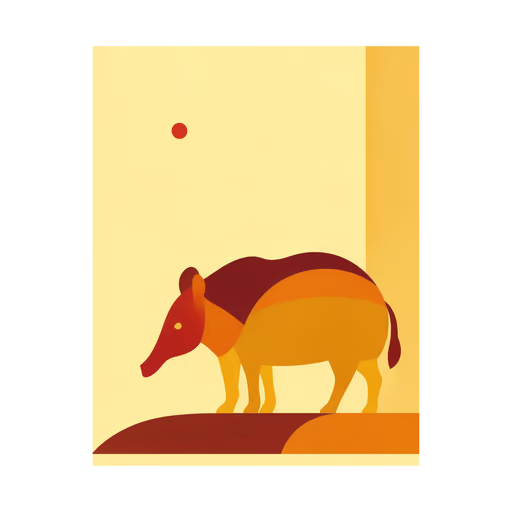
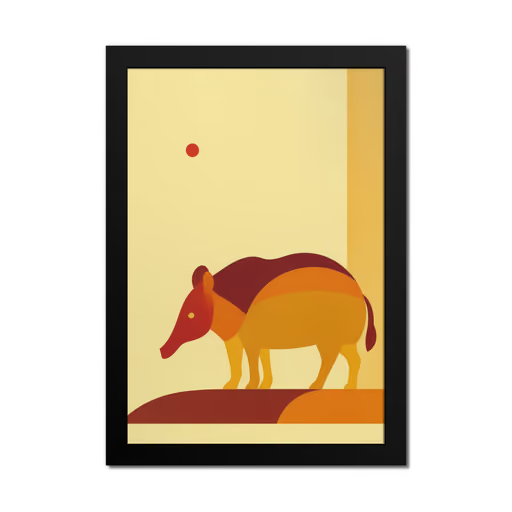
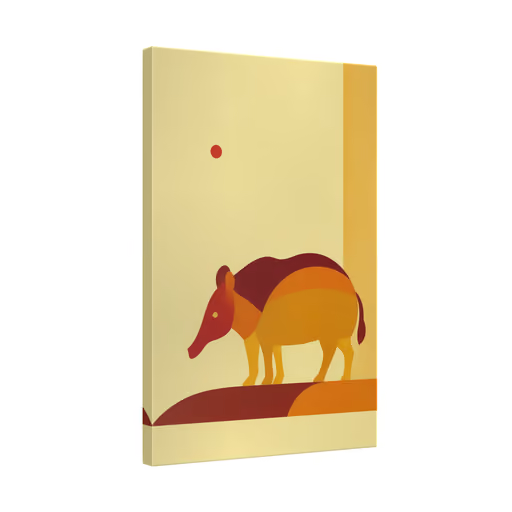
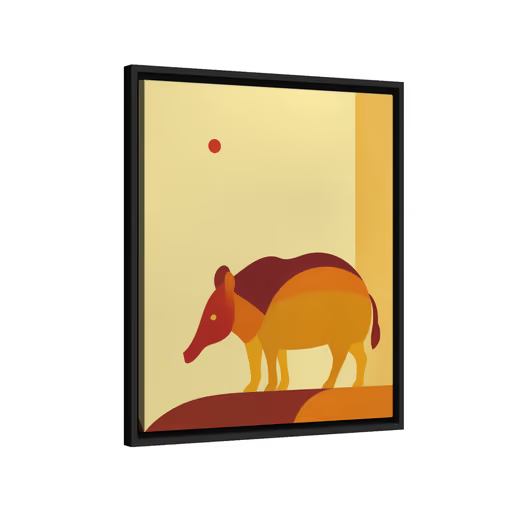
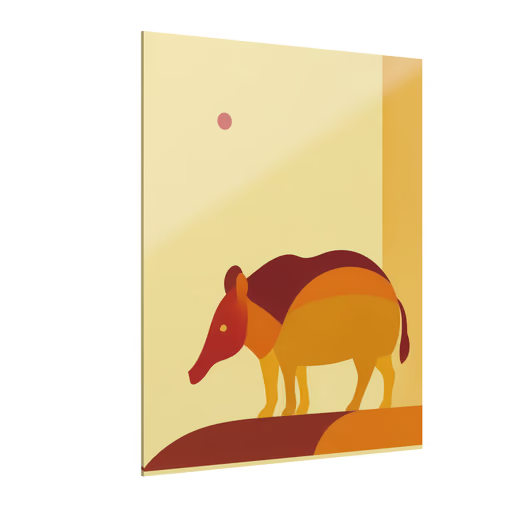
This minimalist digital artwork presents a stylized South American tapir, Tapirus terrestris, rendered as a complete animal silhouette with generous open space and refined geometric abstraction. The full-body tapir stands in profile near the lower center, facing left, with ample breathing room on every side. Its recognizable long snout, rounded ears, heavy shoulders, compact body, short legs, and broad tapering tail are reduced to a few clean forms: a deep red oval head and elongated muzzle, a dark burgundy-red arched back, a warm orange torso, four simplified yellow-orange legs, and one restrained curved tail. A single muted yellow eye marks the face. Broad negative-space shapes define the body without outlines, while two overlapping color fields create a controlled transition from burnt orange along the neck to ochre yellow across the belly. Beneath the animal, a low horizontal ground shape consists of one flattened dark red arc and a smaller orange semicircle suggesting a quiet patch of earth. Behind it, a large pale yellow field fills most of the composition, interrupted only by a thin vertical orange form in the upper right and a small red circle near the upper left, both widely separated from the tapir. The background remains an uncluttered expanse of warm yellow with no scenery or objects beyond these essential accents. The palette is limited to red, yellow, and orange, using dark crimson, rust, ochre, amber, and golden-yellow values through restrained tonal transitions. The artwork extends edge to edge as a seamless image surface, with the tapir fully contained inside the composition and surrounded by broad areas of empty color.
| Subjects | South American Tapir |
|---|
| Style inspiration | Minimalist |
|---|
| Colors | Yellow |
|---|
| Orientation | Portrait |
|---|