Overview
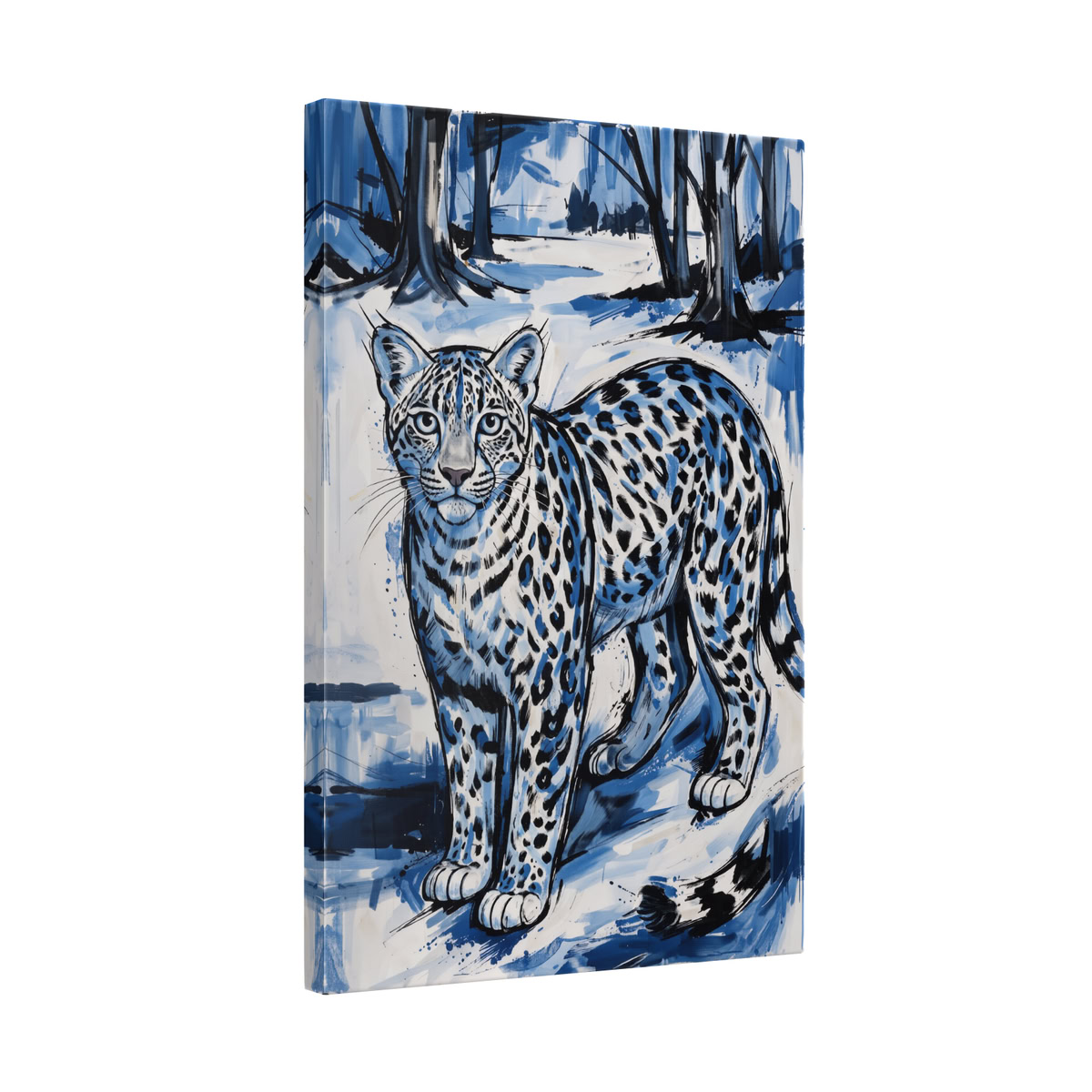
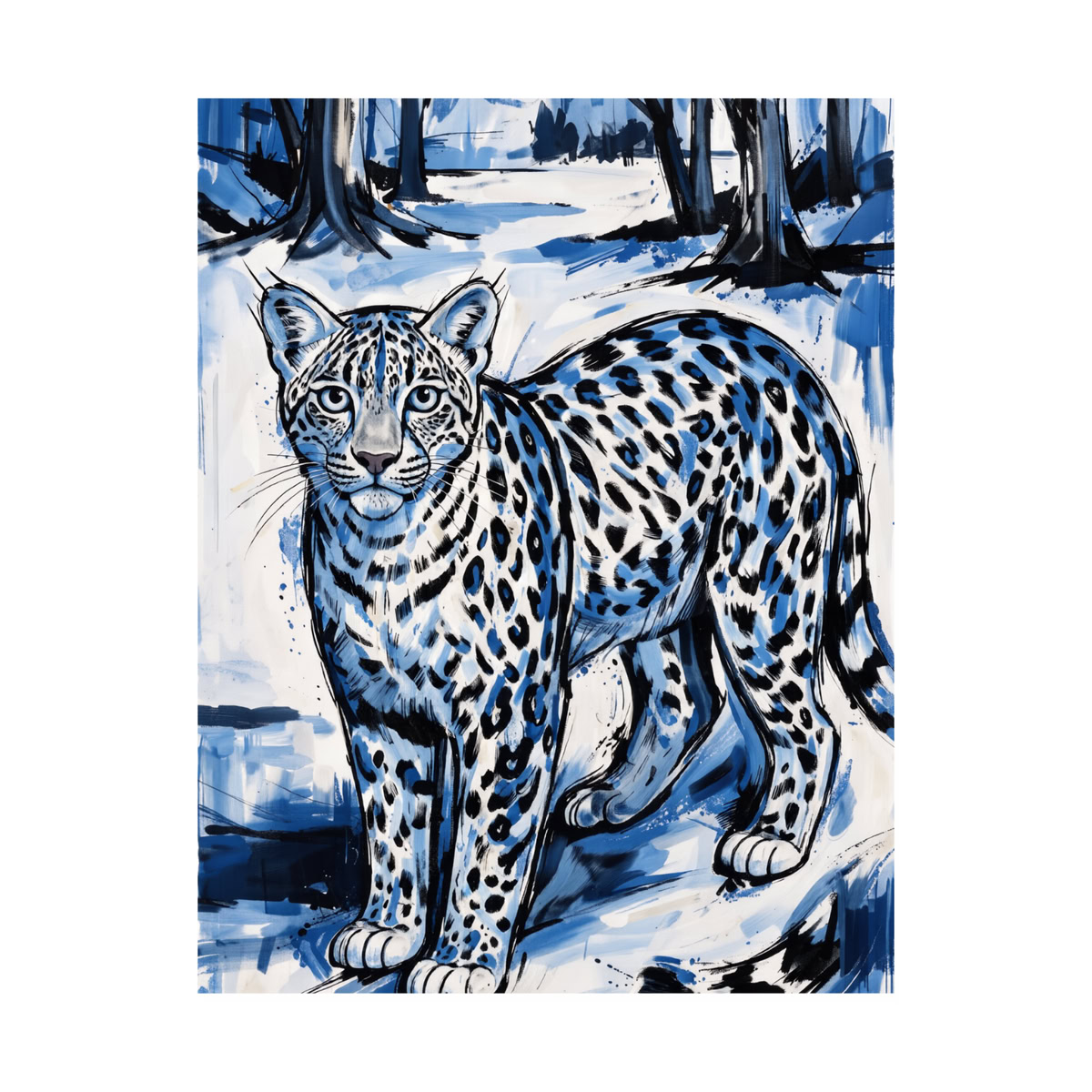
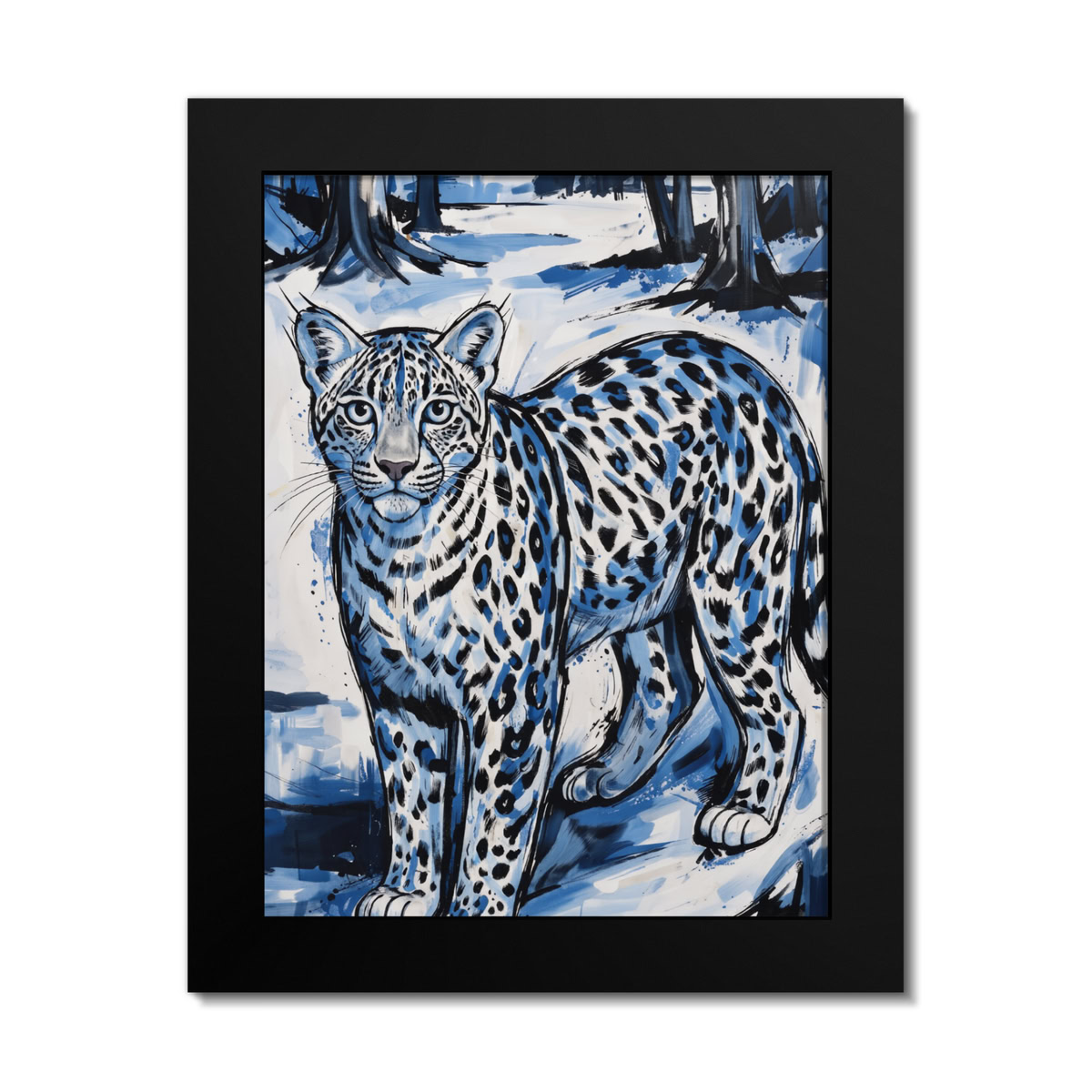
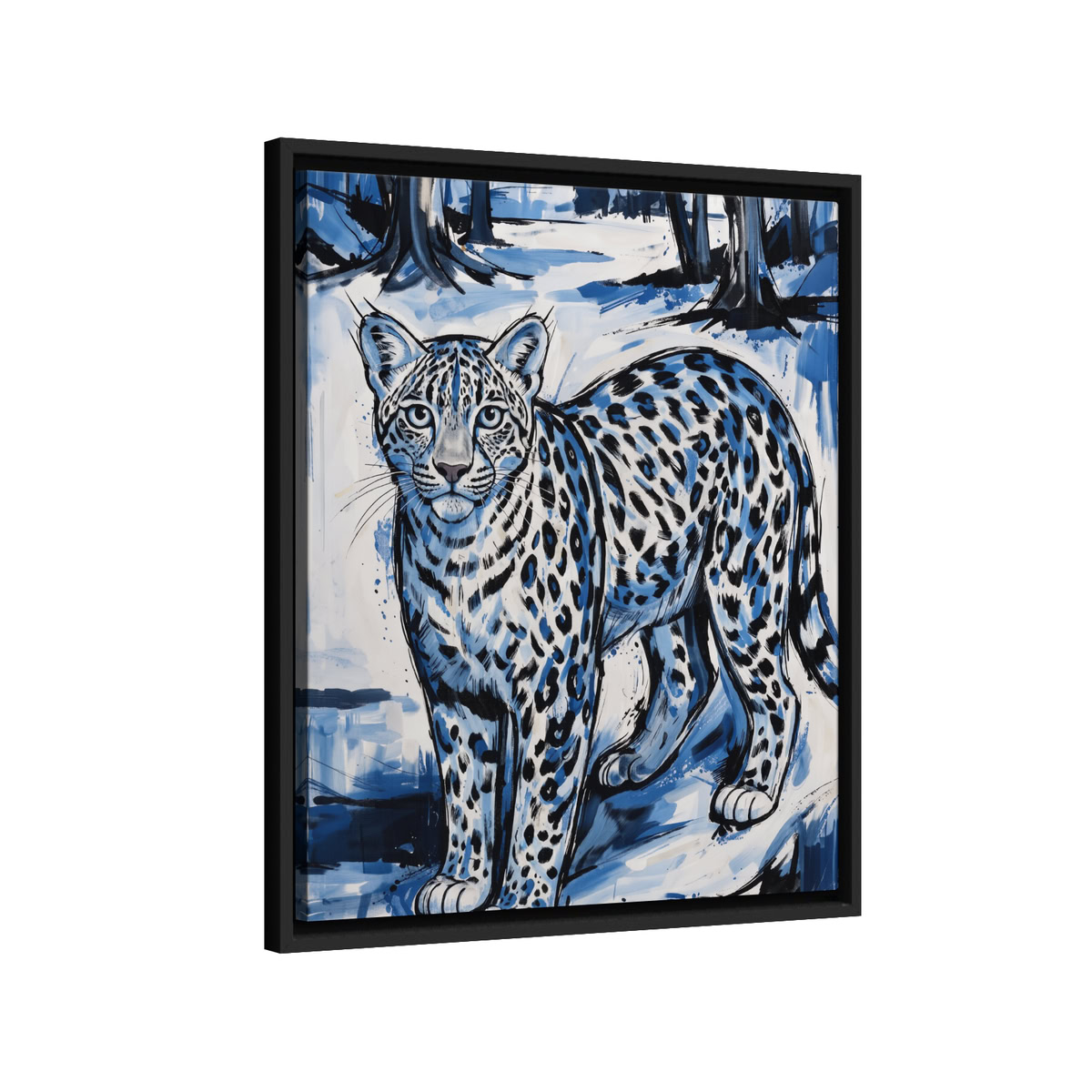
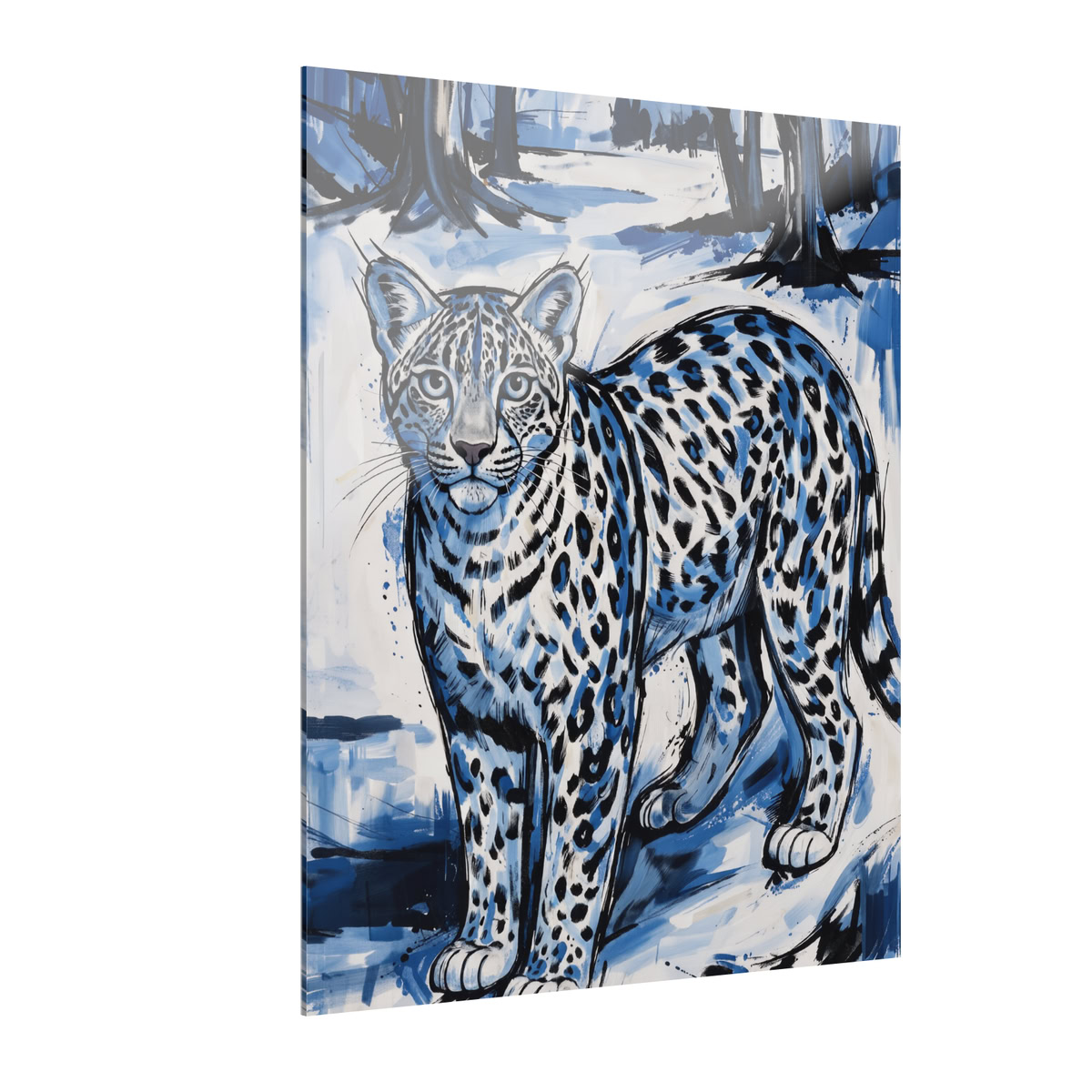
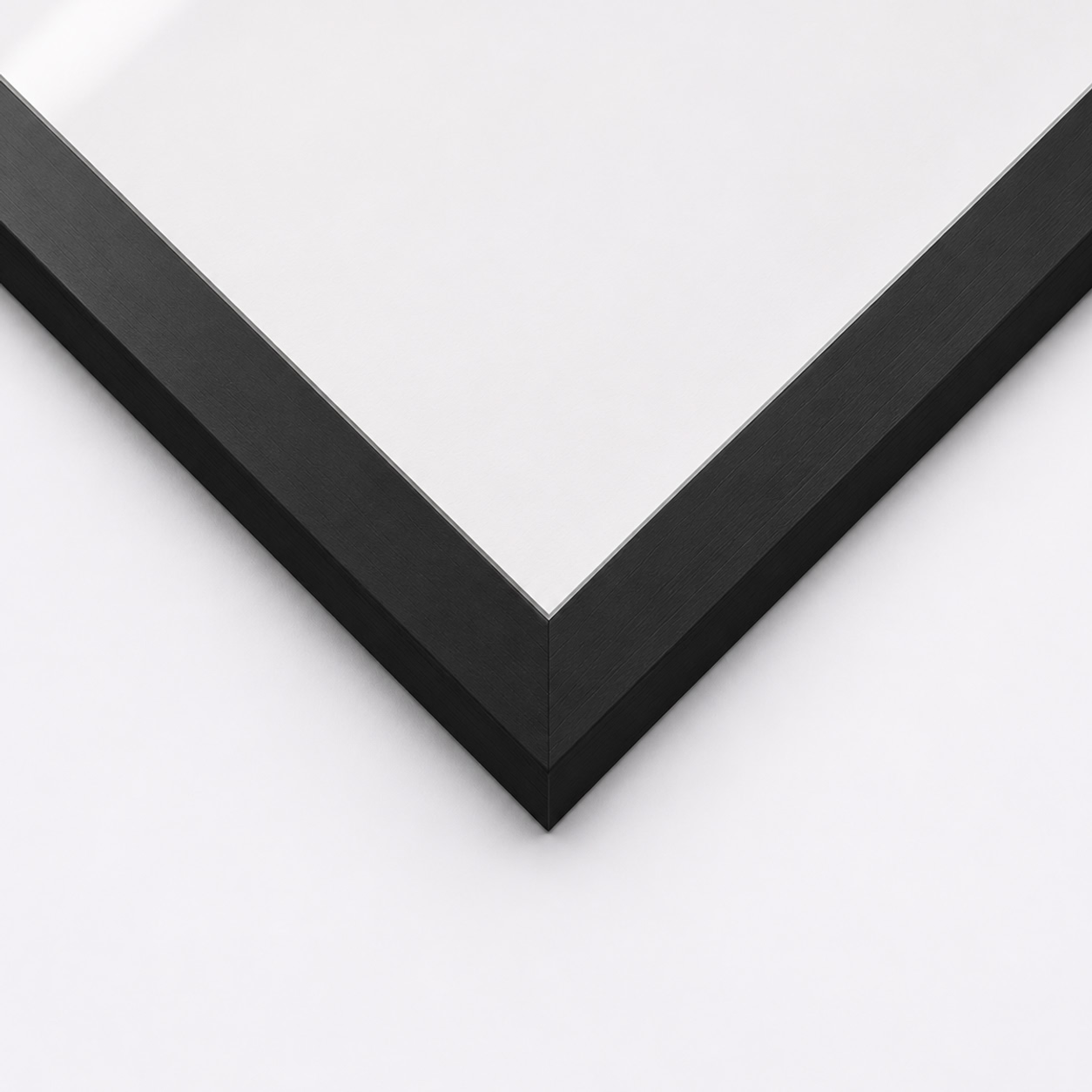
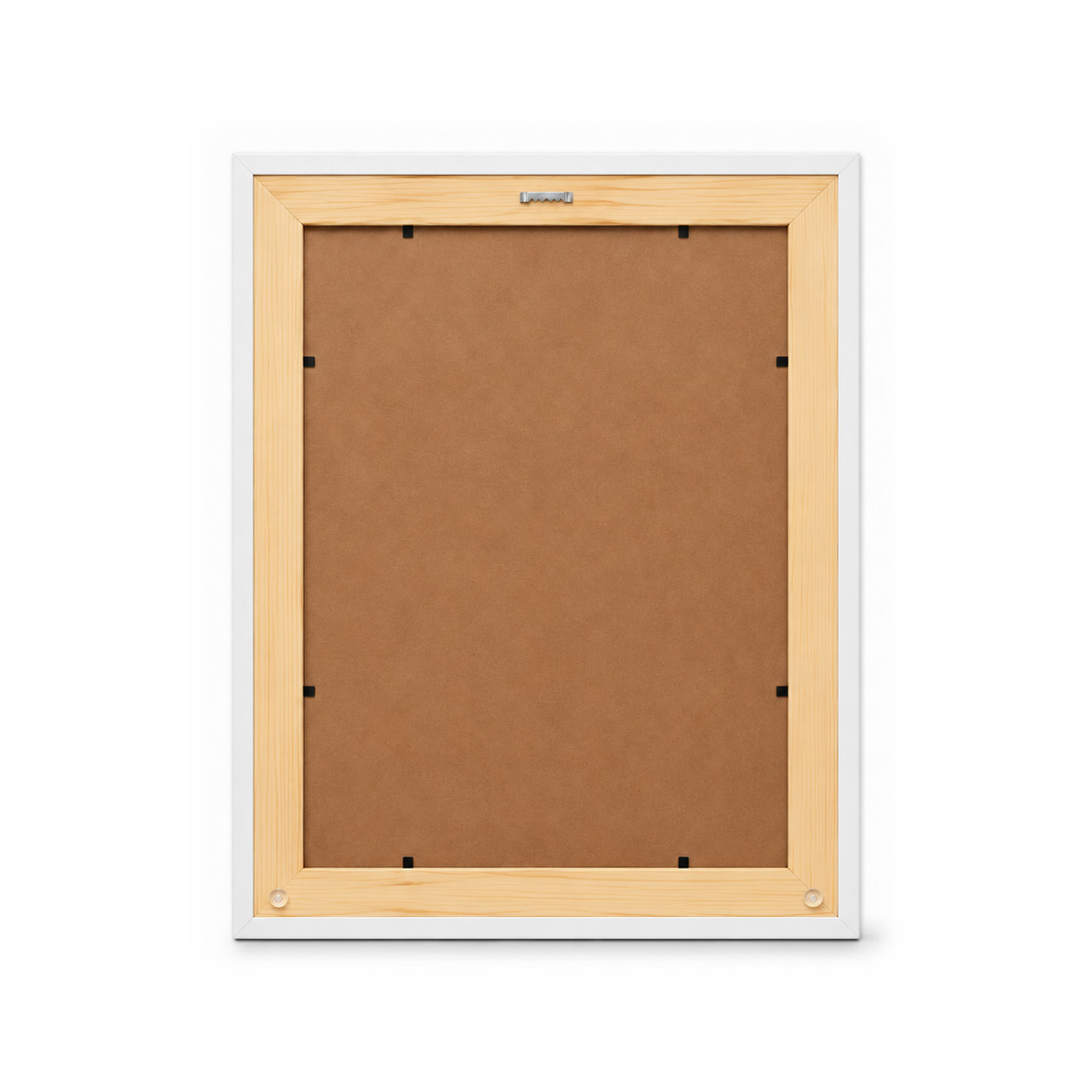
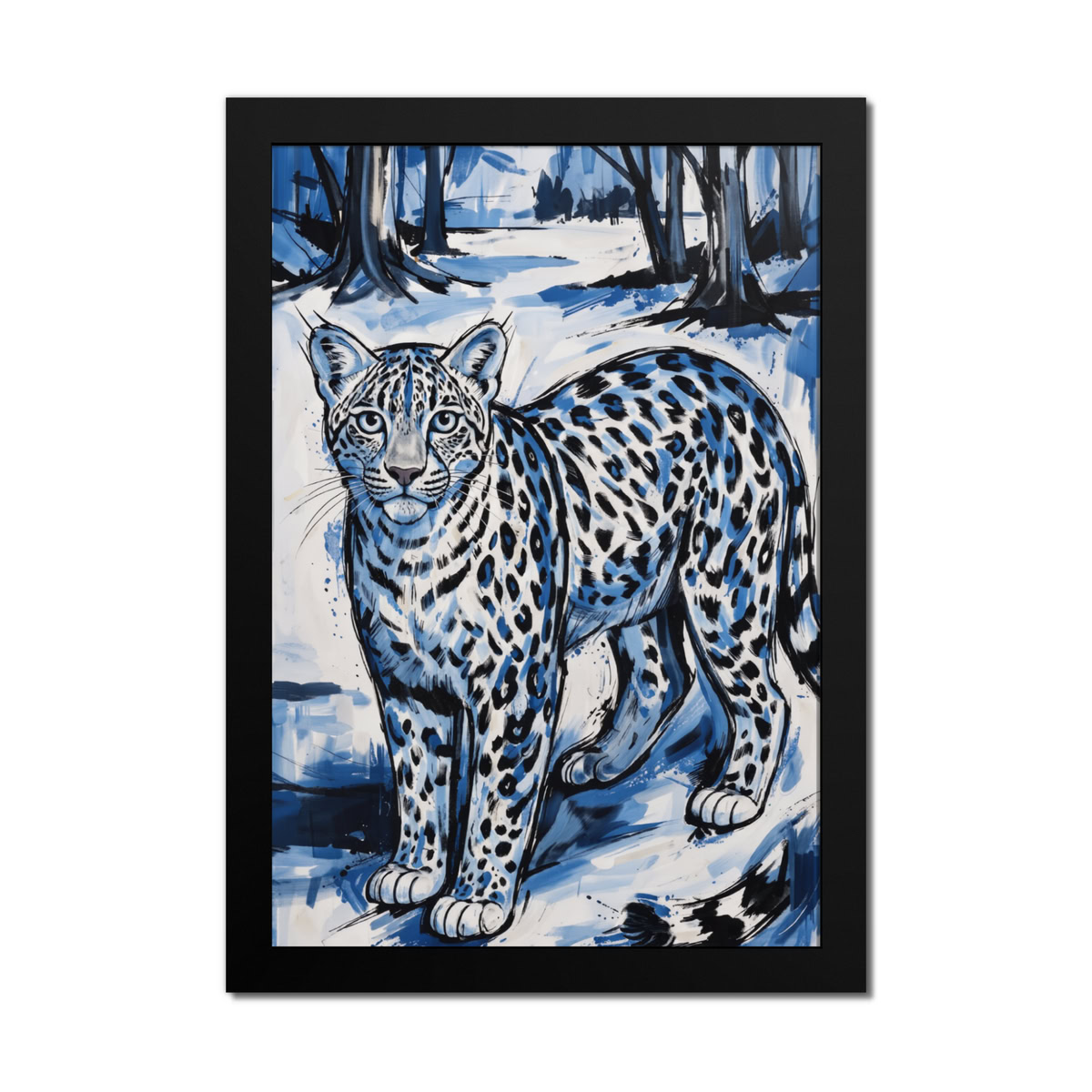
A fine art paper print measuring 8 × 10 inches in a black pinewood frame with a plexiglass cover. The artwork has a portrait orientation. The visible palette consists of blue, white, and black. Available in 6 paper sizes (5 × 7, 8 × 10, 11.8 × 16.5, 16 × 24, 23.4 × 33.1, or 28 × 40 inches) with black or white frames. This digital composition in an expressive style features a complete ocelot, Leopardus pardalis, centered in an abstract landscape. The animal stands in full-body profile facing left, its head turned toward the viewer, with all four paws, long ringed tail, ears, face, and body contained well inside the image edges. Emphatic black contours break into jagged, calligraphic strokes around the alert triangular ears, narrow muzzle, arched back, muscular legs, and sweeping tail. White fur is transformed into dense fields of blue, white, and black: cobalt-blue planes shape the torso and limbs, while irregular black rosettes and spots flare outward as expressive marks across the face, shoulders, flanks, and tail. The markings remain recognizable as ocelot patterning but dissolve at their edges into dry-brush streaks, scraped patches, splatters, and forceful directional hatching. The ocelot’s wide eyes are rendered in stark white and black, with blue irises and sharply angled brows creating an intense gaze. Behind it, broad blue and black shapes suggest a sparse forest clearing through crooked vertical trunks, fractured ground, and restless bands of color rather than literal scenery. Quiet areas of pale blue and white surround the animal, balancing the darker forms without crowding them. Restrained transitions from deep navy to icy blue and chalk white create nuanced tonal variation within the limited palette. The artwork fills the canvas edge to edge with no border, frame, mat, paper edge, or surrounding surface; only painted imagery reaches every corner, composed entirely of blue, white, and black, with no lettering, signatures, watermarks, or logos.
Subjects and details
The main subject is a complete ocelot, Leopardus pardalis, centered in the middle of an unoccupied abstract landscape and surrounded by generous breathing room on every side. The animal stands in full-body profile facing left, its head turned toward the viewer, with all four paws, long ringed tail, ears, face, and body contained well inside the image edges. Emphatic black contours break into jagged, calligraphic strokes around the alert triangular ears, narrow muzzle, arched back, muscular legs, and sweeping tail. White fur is transformed into dense fields of blue, white, and black: cobalt-blue planes shape the torso and limbs, while irregular black rosettes and spots flare outward as expressive marks across the face, shoulders, flanks, and tail. The markings remain recognizable as ocelot patterning but dissolve at their edges into dry-brush streaks, scraped patches, splatters, and forceful directional hatching. The ocelot’s wide eyes are rendered in stark white and black, with blue irises and sharply angled brows creating an intense gaze. Behind it, broad blue and black shapes suggest a sparse forest clearing through crooked vertical trunks, fractured ground, and restless bands of color rather than literal scenery. Quiet areas of pale blue and white surround the animal, balancing the darker forms without crowding them. Restrained transitions from deep navy to icy blue and chalk white create nuanced tonal variation within the limited palette. The artwork fills the canvas edge to edge with no border, frame, mat, paper edge, or surrounding surface; only painted imagery reaches every corner, composed entirely of blue, white, and black, with no lettering, signatures, watermarks, or logos.