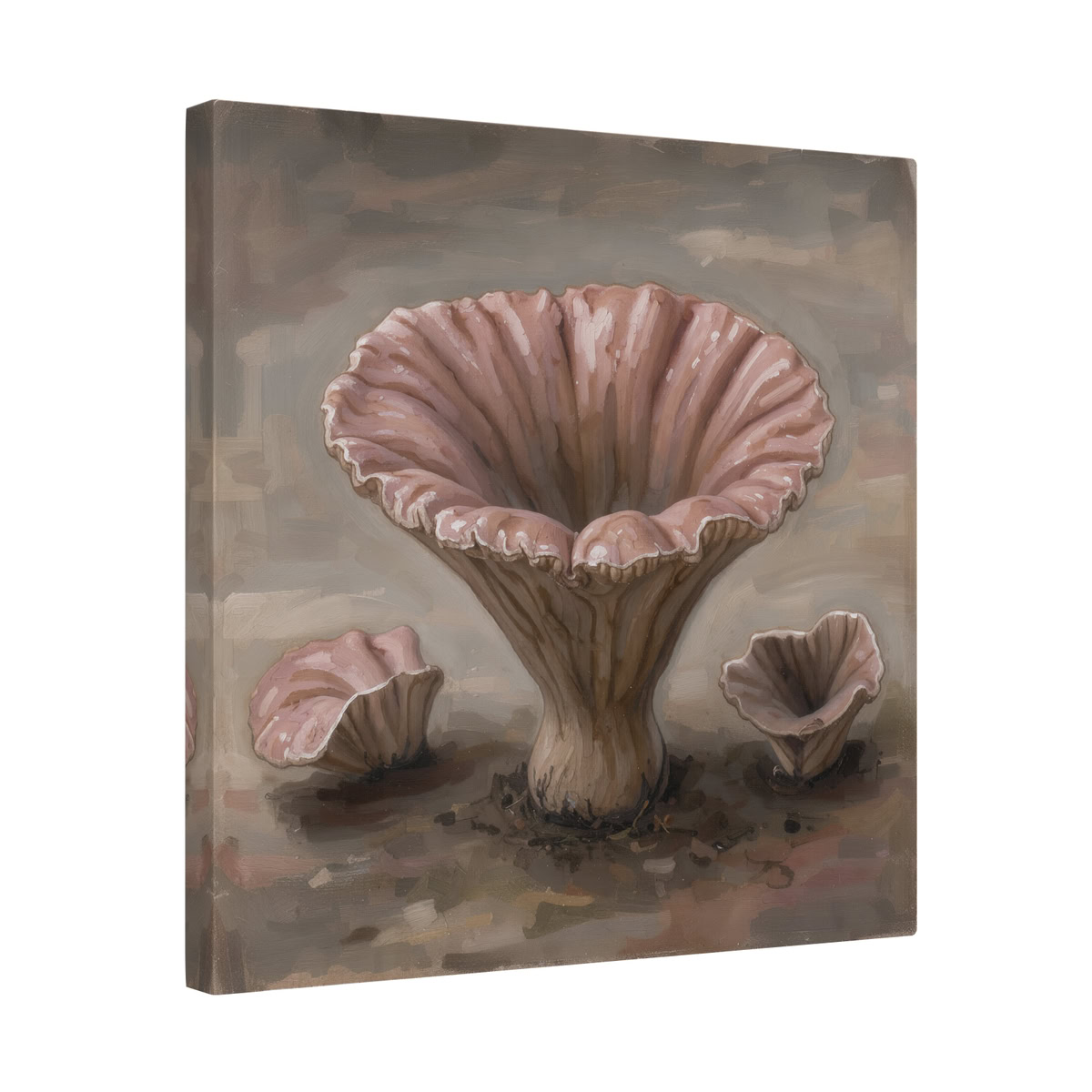
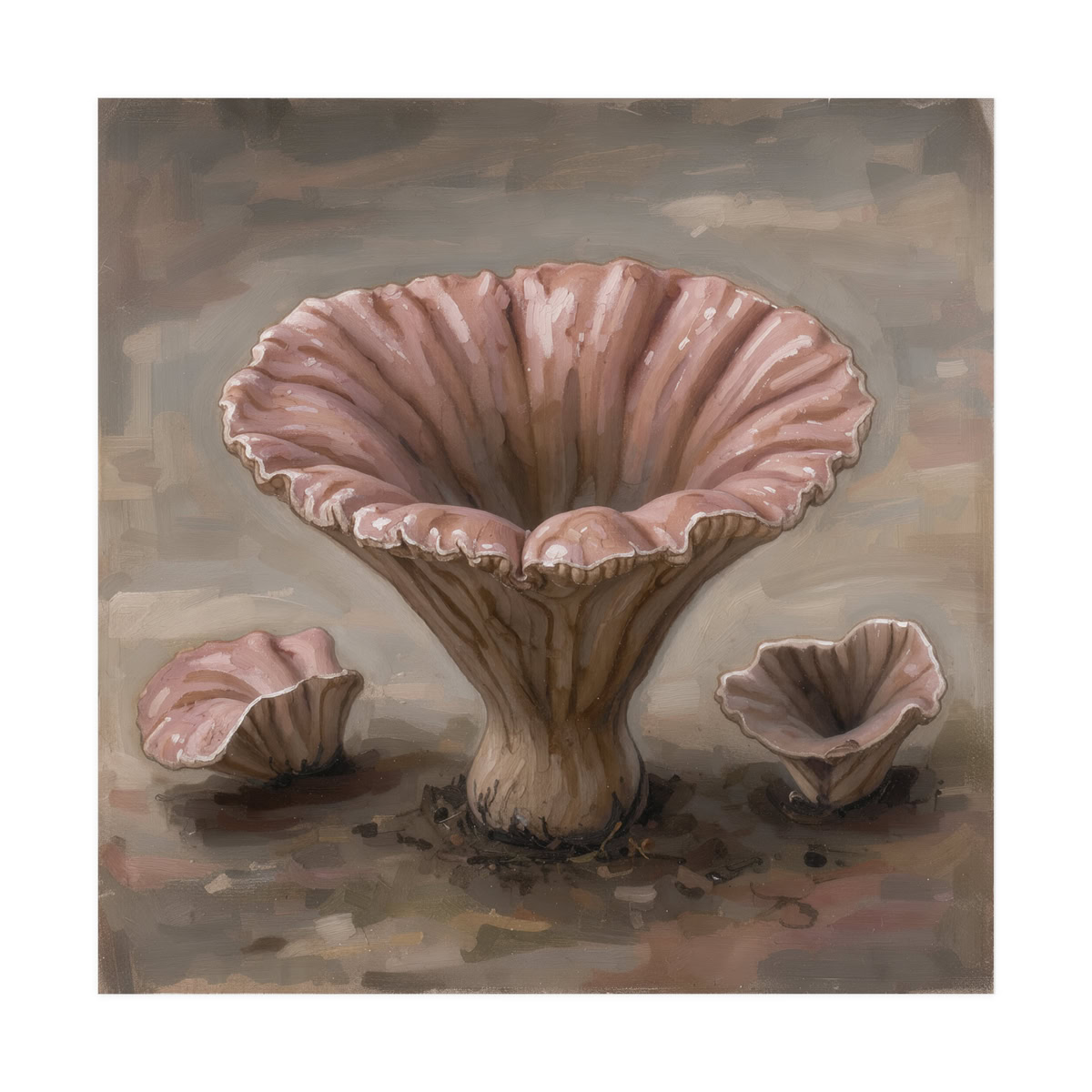
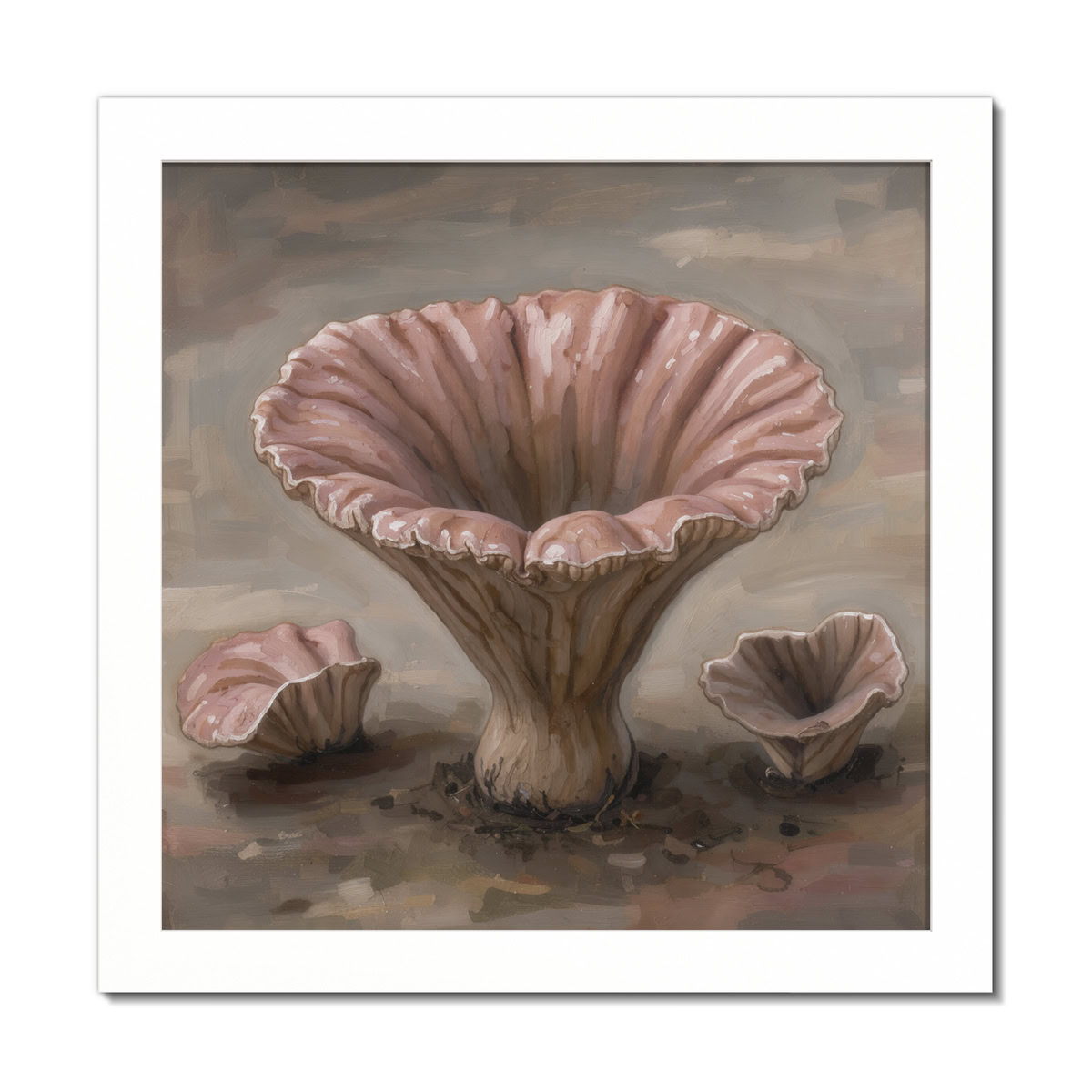
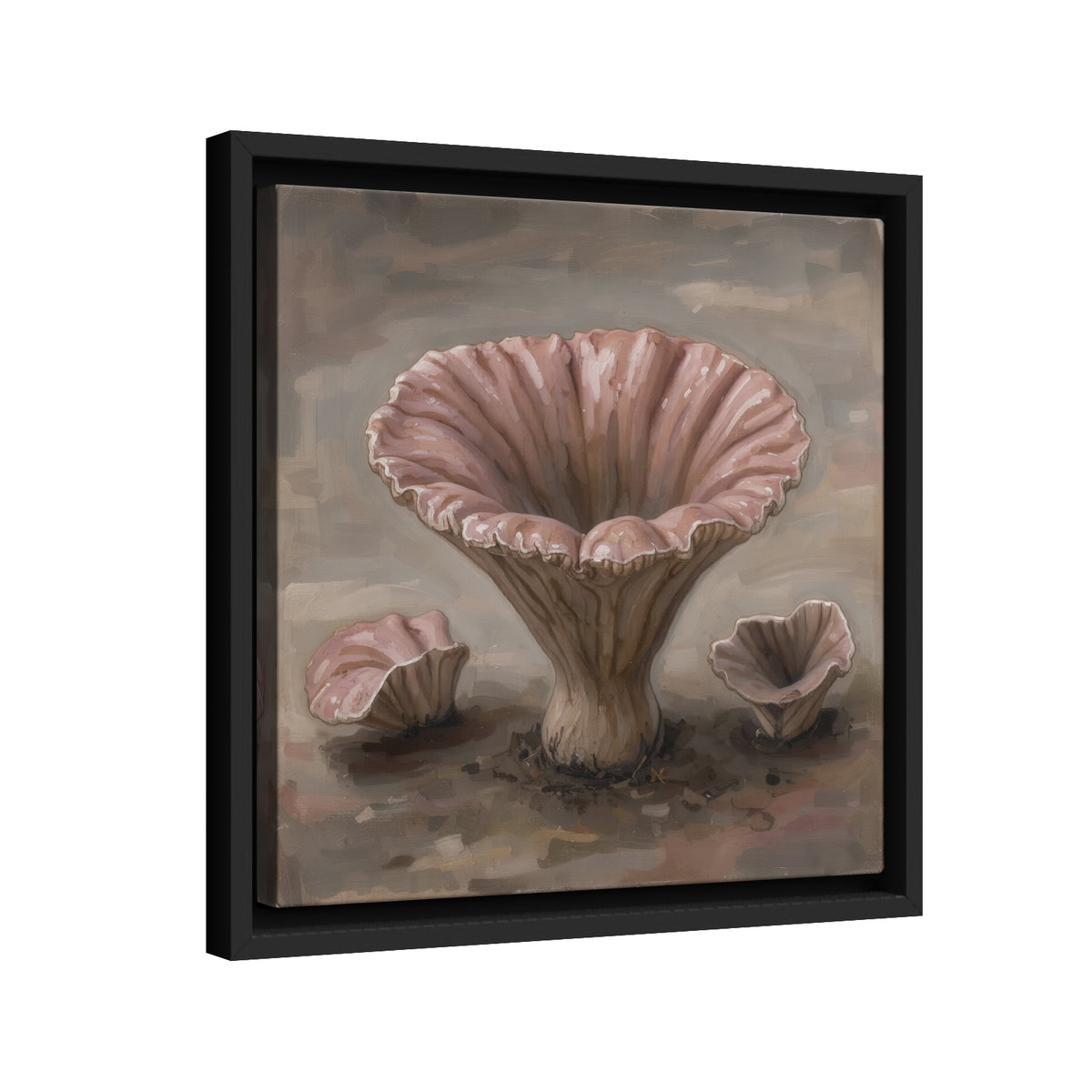
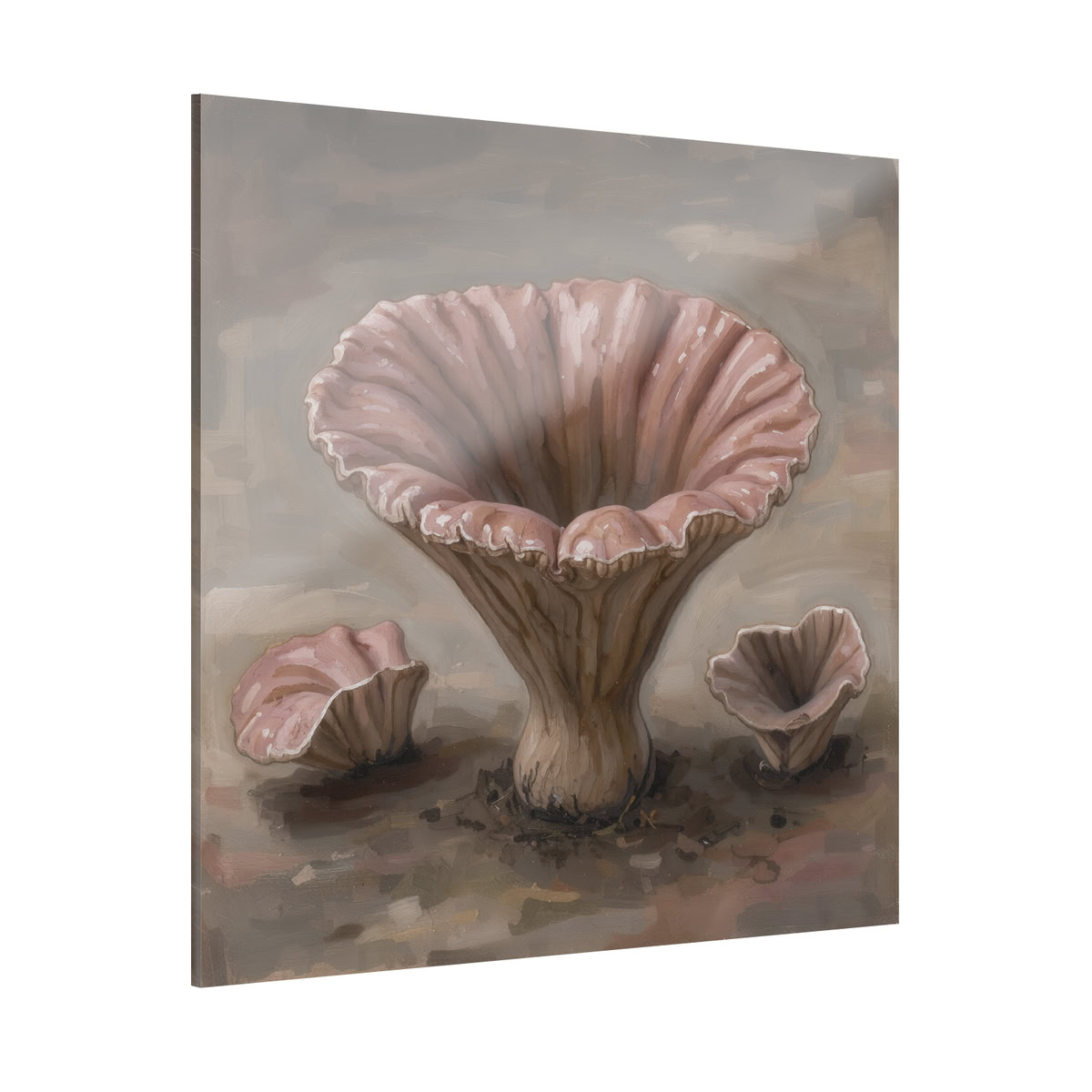
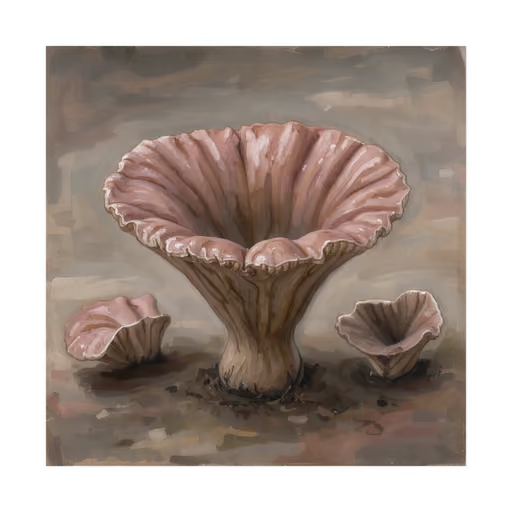
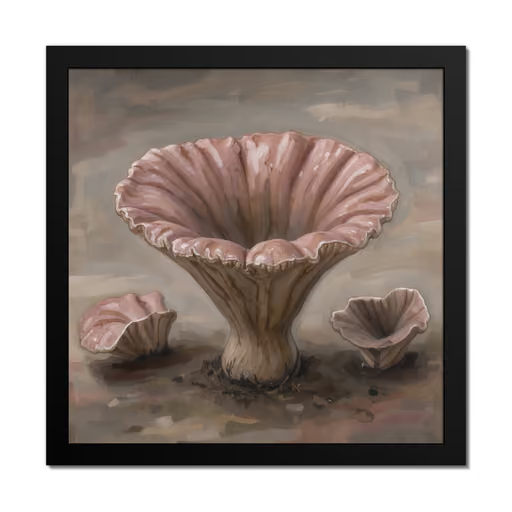
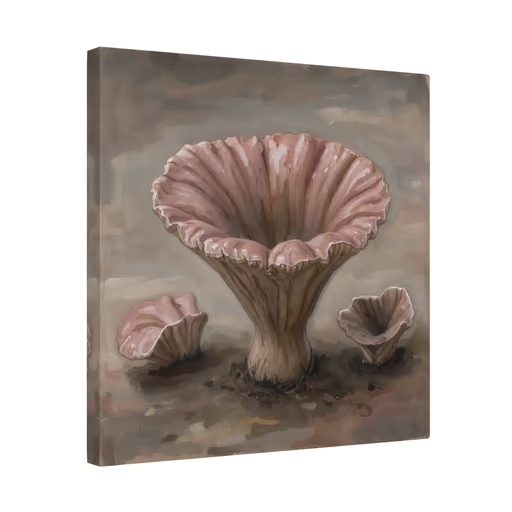
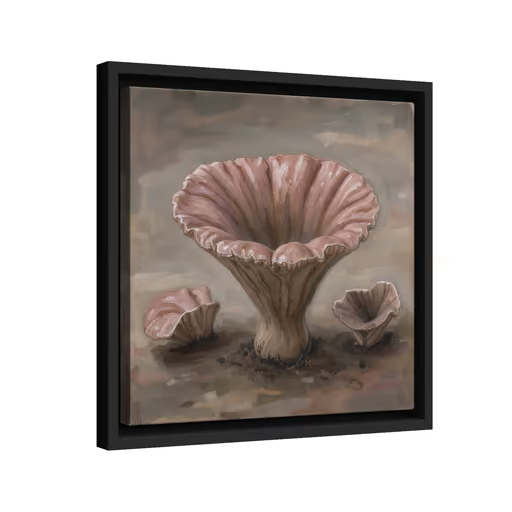
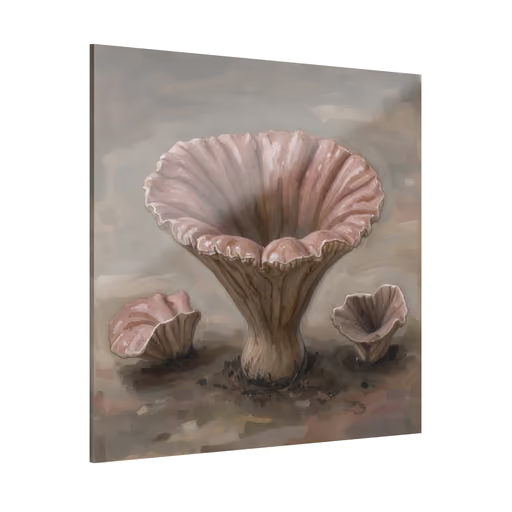
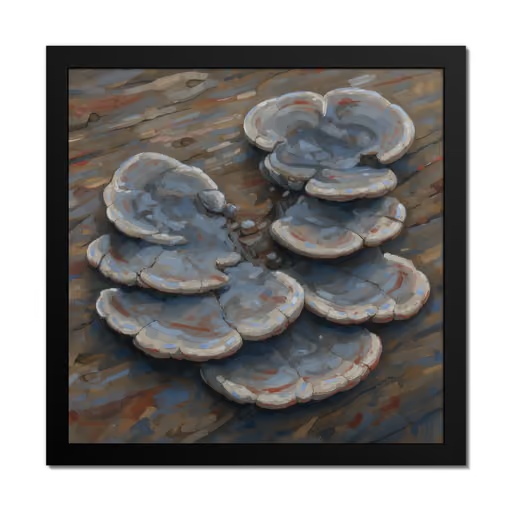
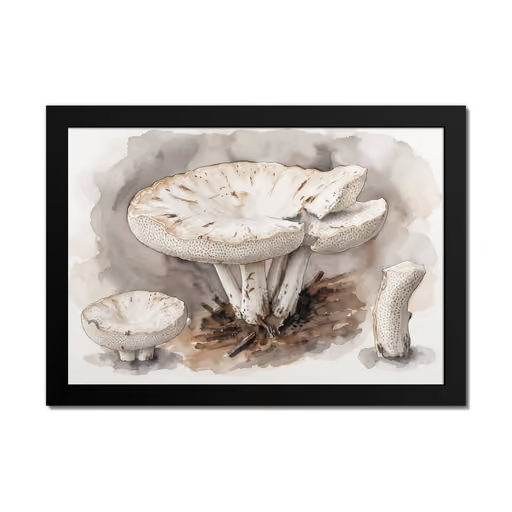
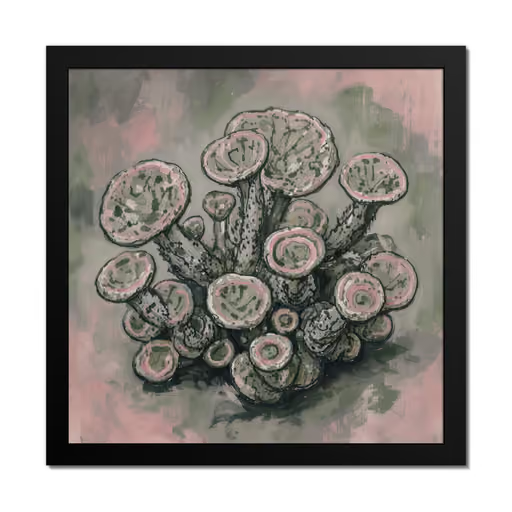
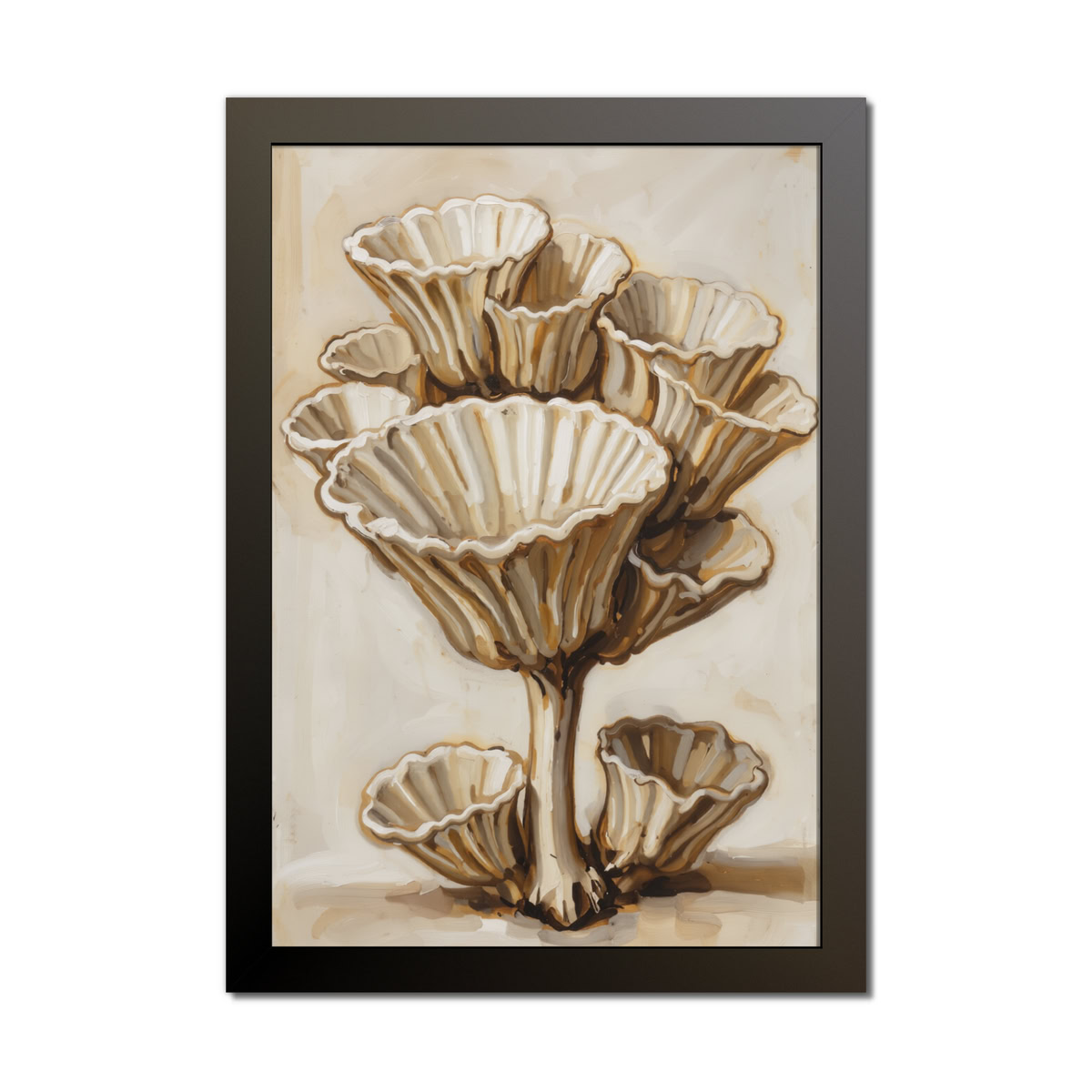
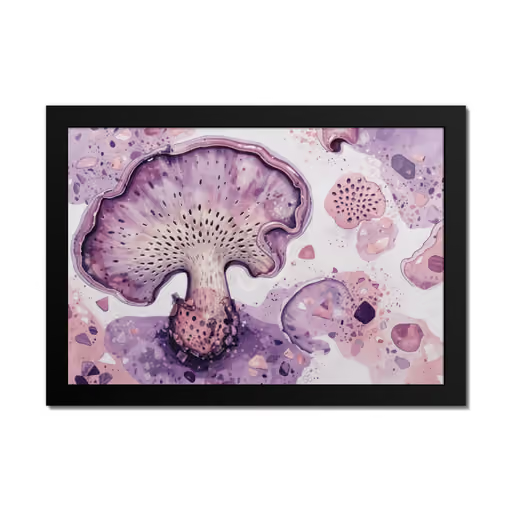
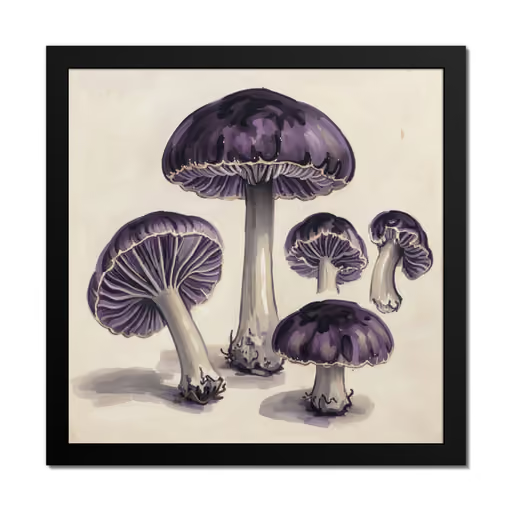
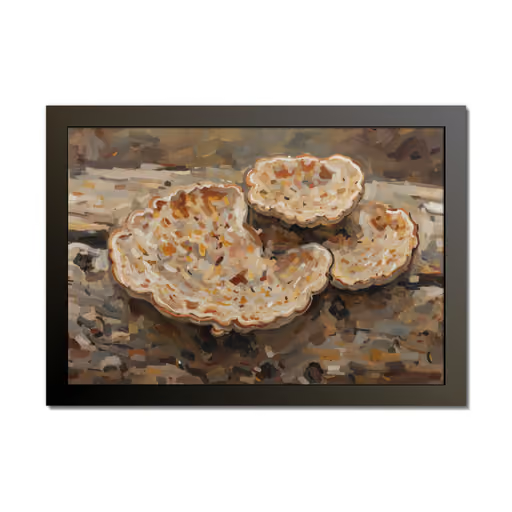
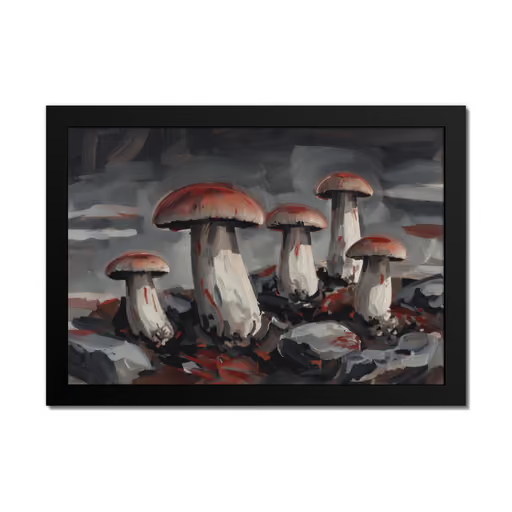
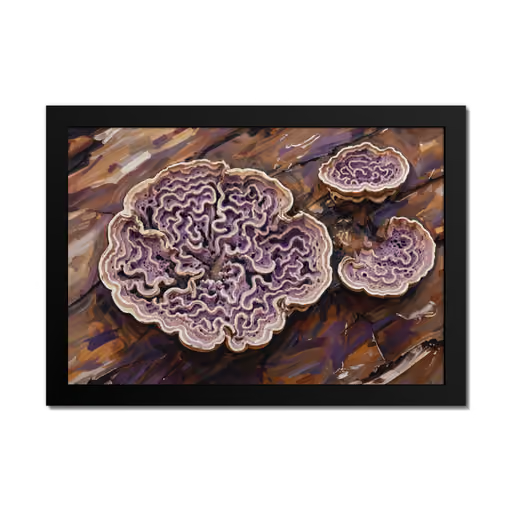
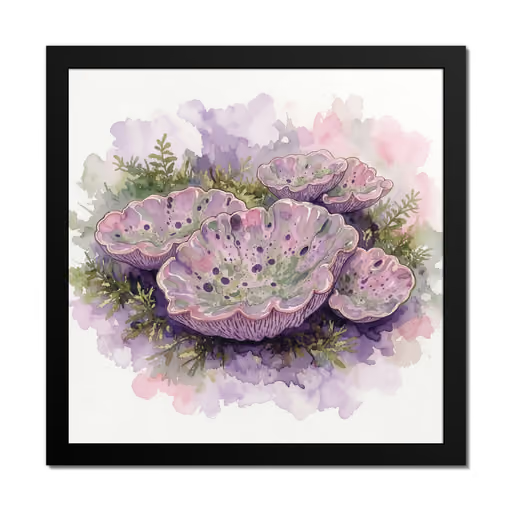
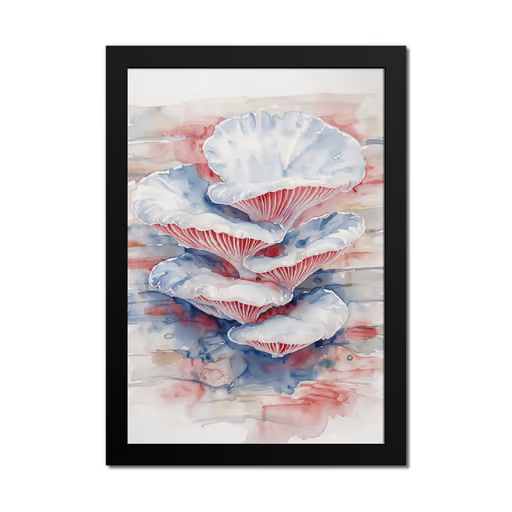
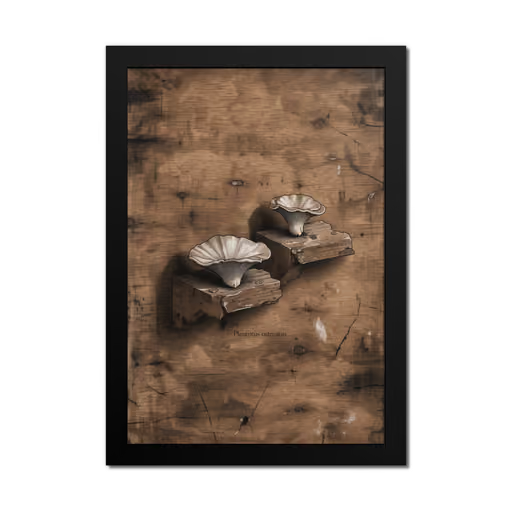
This digital composition in an oil-painting style presents a natural-history study of the Common Funnel, Infundibulicybe gibba, rendered with blended opaque passages and substantial brush-like strokes. Centered in the composition, a complete specimen of the fungus stands alone on a quiet patch of muted earth, surrounded by generous open space. Its characteristic structure is clearly defined: a broad, shallow funnel-shaped cap with a deep concave center, an irregular rolled rim, and a short thick stem widening into a rounded base. The cap shifts from dusty pink along the raised outer folds to warm brown within the recessed bowl, while the underside and inner surface carry layered gray-brown shadows. Small reflected highlights in pale pink follow the curved rim and moist contours without bright white accents. Several restrained secondary forms sit near the main specimen as partial studies of its anatomy: one detached view of the cap’s folded edge rests to the left, and a compact cross-sectional form showing the hollow infundibulum sits to the right, both fully contained within the painted scene and separated from the central fungus. The background consists of quiet horizontal passages of gray, umber, taupe, and subdued rose, suggesting bare ground fading into an unoccupied neutral field. Soft surface shadows anchor the stem and supporting studies, while broad dry-brush marks create restrained texture around them. The palette remains limited to gray, brown, and pink, with nuanced transitions between light and dark values. The entire image fills the canvas edge to edge, with the complete fungal subject clear of every edge and no border, frame, mat, visible paper edges, surrounding surface, people, lettering, signature, watermark, or logo.
| Subjects | Common Funnel |
|---|
| Style inspiration | Oil-Painting Style |
|---|
| Colors | Brown |
|---|
| Orientation | Square |
|---|